RIO In Action

Flipping the Scandi Script with RIO Ambassador Jon Hazlett

Jon Hazlett August 25, 2025

As a Spey caster of almost 25 years, I get really excited about new stuff! Here on my homewater of the Rogue, we have a long summer steelhead season. And if you include the coastal winter pursuits, there is no dust collecting on my two-handers. That gives me a great opportunity to stay on top of the game, and I love sharing my thoughts and experiences with those who don’t have that luxury.

The introduction of new Elite Scandi Body heads and MDC Tips from RIO is bound to stir up questions. As a member of the “figure this stuff out” Spey community, I’ve had a chance to wrap my head around pairing up these new heads and tips. Now I’m in the “FULL STOKE” phase as I discover more ways to utilize the system.

My history with the RIO Scandi Body dates back more than a decade, and it’s really by accident. When trout Speys were first introduced, we had the rods but no lines specific to them. That’s when we first found the RIO Scandi Body – originally designed for the European market. Turns out, these heads were incredible. At 23ft, they were in that “long Skagit, short Scandi” category and, with trout Speys paired with a 10ft VersiLeader or Replacement Tip, they were the perfect heads for various applications. From soft-hackles to medium-sized streamers, the Scandi Body became a trout Spey mainstay. As such, the current RIO Trout Spey lines are Scandi Bodies in disguise.

Next, we tried the Scandi Body on the bigger Speys, using it for what I like to call the “Skagit Finesse” application. Take whatever grain weight you like on a Skagit, match the preferred grains or go down one size. On 5wt to 8wt Speys, a whole range of tips worked: from 10ft VersiLeaders to 15ft Replacement Tips (now called Classic Tips) to T-8 (even T-11 paired with the heavier head sizes). The versatility of the Scandi Body was unparalleled. In fact, most of my all-time favorite rod/line combinations include a Scandi Body! I think it’s the best casting short head ever made, and I share that opinion with many of my Spey comrades.

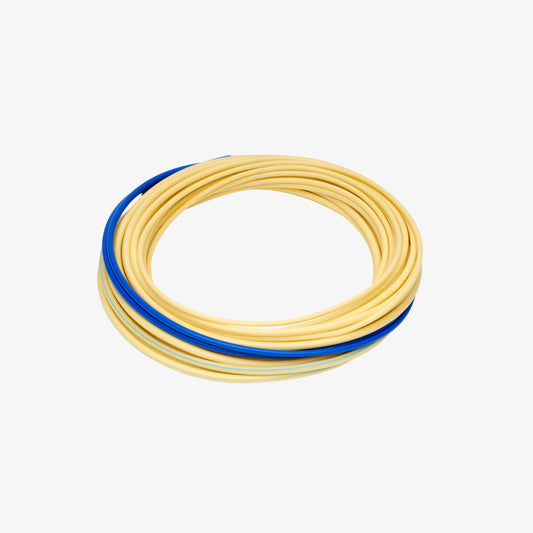
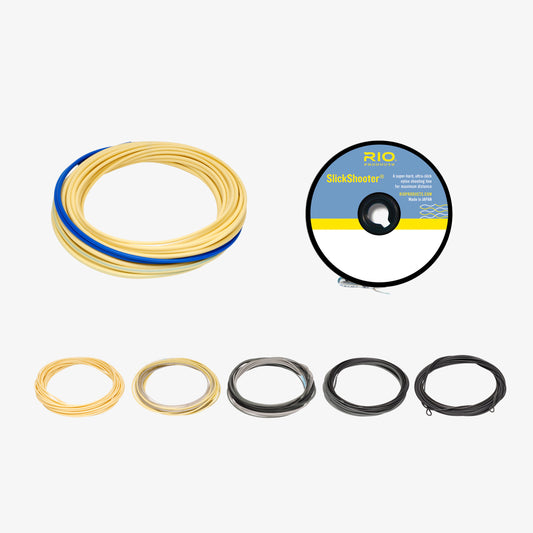
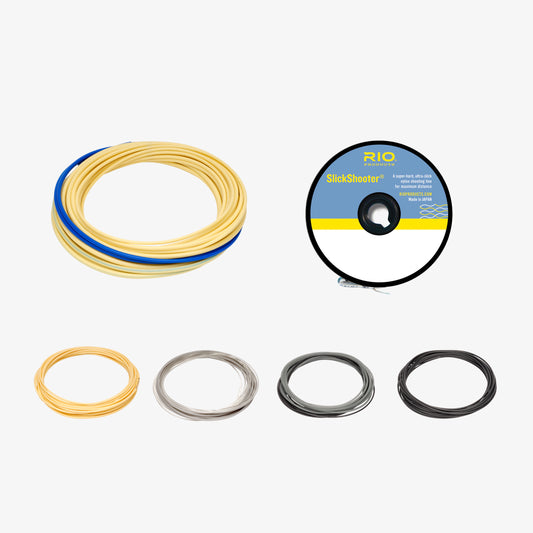
That said, let’s introduce the new Elite Scandi Body and MDC Tips. With a full range of Scandi Body head sizes, and 12ft and 18ft multi-density tips to go with them, the possibilities and applications are now even more vast. So, what am I going to do with them? My first reaction was that I’ll definitely use the 12ft tips. That’s a no brainer. The 18 footers? Nah. I’ve never used a tip that long. Well, I was wrong. After spending some time with the new Scandi Bodies and both tips (and having my clients fish them too), you could say that I’m “all in” on both.

So… how do I use them?
1) Euro Style (European Load Preference): Ultralight, fast & tippy

Many Europeans prefer their Scandis much lighter than we do here in steelhead country. And it also requires some skills! Matching rod and line is quite simple. If you have an 8wt, get the 8wt Scandi Body and the 12ft or 18ft 7/8 MDC Tips to match. If you want a little more load, get the 8/9.

Keep in mind that the 18ft tips add to the total grain weight of the system as it relates to your D-Loop. So, factor that in when choosing your Scandi Body head size. You have to figure that about 1/3 (6 feet) of the 18ft tip will be part of your D-Loop, which will be ~43 or 50 grains.

EXAMPLE
Rod: Sage R8 9140
Body: 9wt Scandi Body (470 grain)
Tip: #9+ 18ft MDC Tips

NOTE: RIO legend Simon Gawesworth has been fishing this example all spring and summer in his pursuit of Atlantic Salmon, and he loves the pairing!

2) America’s Choice (PNW Load Preference): Deeper loading, more akin to our full Scandi grain-weight preferences

’Merica! Yes, we tend to do things differently here. We actually like to feel the rod bend. Is that so wrong? We have Skagit lines, Intruders, Snap-T’s and Kack Hand (or is it Cack?). We wear flat bills, pop Zyns and drink IPAs. Let’s not forget lifted trucks and hair-metal bands. And, when it comes to Scandi lines, a little load goes a long way. I give credit to those who can cast the ultralight lines. But let’s be real. Most of us like a little more forgiveness.

So, some simple math: The average Scandi grain weight for a 7wt is 470. One third of the 18ft 7/8 MDC Tip is about 43 grains. Subtract 43 from and you get: 427 grains. Therefore, my starting point for the Scandi Body is either going to be the 400- or 435-grain head. Why? You have to figure that about 1/3 (6 feet) of the 18ft tip will be part of your D-Loop, which will be about 43 grains (for the 7/8) or 50 grains (for the 9 plus). The 18ft tips add to the total grain weight of the system as it relates to your D-Loop. So, factor that in when choosing your Scandi Body head size.

EXAMPLE 1
Rod: Sage R8 7136
Body: 8/9wt Scandi Body (435 grain)
Tip: #7/8 18ft MDC Tips 

EXAMPLE 2
Rod: Sage R8 7130
Body: 8wt Scandi Body (400 grain)
Tip: #7/8 18ft MDC Tips 

NOTE: These examples have been fished hard by both myself and clients this season and are both lights out!

3) Skagit Finesse: Your short head multitool for Skagit load meets delicate touch

As mentioned earlier, we’ve been using the Scandi Body for years. VersiLeaders, 15ft Replacement Tips (now called Classic Sink Tips), T-8 (even T-11 on the bigger sizes) and now the new 12ft MDC Tips give Spey anglers ultimate versatility. To pair rod and line, take whatever you like for a Skagit and either match it or go one size down. The beauty of the Skagit Finesse application is its compact, versatile and casts amazing! I can fish anything from a small traditional steelhead fly up to a medium-size streamer. And they’re great on trout Spey, switch rods and full-size two-handers.

For those used to casting Skagit lines, you won’t have to change your casting stroke (like you would using a full Scandi). Of course, being compact, they cast great in the wind and in tight quarters. The only limitations are when heavy sink-tips like T-14 and big lead-eye flies are required. That’s when the Skagit Max Launch or Power lines come out. But, for 90 percent of my summer steelhead fishing, the Scandi Body fished in the Skagit Finesse format covers all bases.

EXAMPLE 1
Rod: Sage R8 5126
Body: 8wt Scandi Body (400 grain)
Tip: #7/8 12ft MDC Tips 

EXAMPLE 2
Rod: Sage R8 6130
Body: 8/9wt Scandi Body (435 grain)
Tip: #7/8 12ft MDC Tips 

NOTE: These are both “kids braces can wait” examples, so be prepared to get your wallet out after casting!

What’s Right for You?

If you want the challenge of a light, ultrafast, tip-casting load, go “Euro Style”.  Most of us, however, probably fall into the category of “America’s Choice”. That’s an easy
transition if you’ve fished Scandi lines in the past. If you want to stay with the Skagit length and still want the versatility, the “Skagit Finesse” zone is a no-brainer.

As a new offering, there are bound to be endless combinations and ways to pair these up. That’s of course what makes it fun for us Spey nerds. For now, I hope this gives you some ideas on how you’ll set up your favorite rods.

Whatever you choose, the Elite Scandi Body and MDC Tips have you covered with a full quiver of multi-density sink tips (and a floating tip), the ultimate tool for covering various water types and fishing conditions.