There are several potential reasons why real-world break strength might vary from a product's labeled rating, such as:
Storage and environmental conditions: Exposure to UV light, heat, cold, and humidity over time can degrade monofilament, fluorocarbon, and braided material, gradually reducing strength below the rated value. Fluorocarbon and braided materials are generally more resistant to UV and moisture than monofilament, but none are immune to long-term environmental effects.
Knots and abrasions: Any knot or nick in the line will reduce effective break strength, often significantly below the labeled rating.
Manufacturing tolerances — other factors and considerations: As with all precision-extruded and tapered materials, small tolerances in raw materials and production conditions may result in minor variation in measured strength between batches. For the considerations outlined below, strength should be viewed as a general guide to help illustrate diameter and application, rather than a precise measurement.
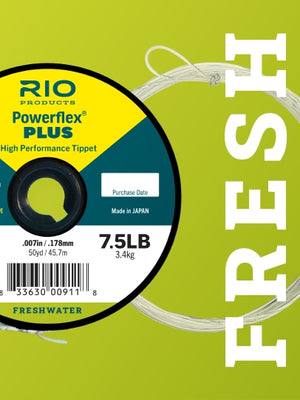
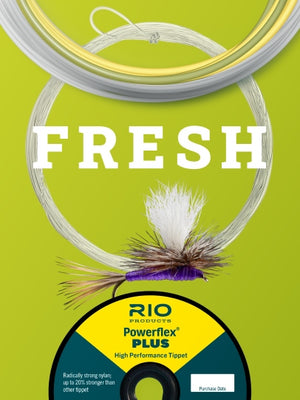
In freshwater applications, leaders and tippets are designed to create a smooth, continuous taper from fly line to fly. This taper is critical for energy transfer, turnover, and natural presentation. Because of this, diameter (commonly referenced as “X”) is often the primary consideration when selecting tippet, with strength serving as a supporting attribute. Rigging choices – such as knot selection, fly size, fishing conditions, and setup configuration can have a significant impact on overall performance.
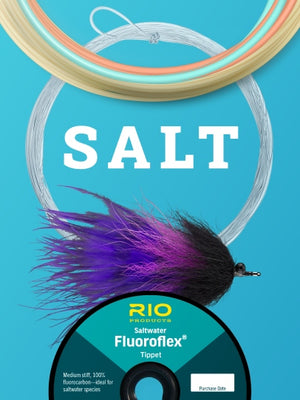
In saltwater applications, where flies are larger, and target species require greater lifting and pulling power, break strength becomes a more primary consideration. Anglers typically select materials based on pound test to ensure the ability to effectively fight and land larger, more powerful fish.