Spey

The Delay River: Discovering a Hidden Atlantic Salmon Fishery in Northern Quebec

Ken Morrish February 04, 2026

In the world of anadromous salmon and steelhead fishing, it often feels that there is nothing new left to be discovered. This past August in Northern Quebec, east of Hudson’s Bay, I was lucky enough to visit an Atlantic salmon river that all the anglers I knew had never heard of, let alone fished.

The Delay River had been hiding in plain sight. The reason being the lodge and their extensive beats of water had been in private ownership for decades and largely underutilized during those years. It proved to be pretty darn good, with several fish to hand each day and great dry fly action.

Getting there is a bit of an undertaking. First, I flew to Montreal and overnighted. The next morning I got on an Air Inuit flight, arranged by the outfitter and included in the price, and flew to the native town of Kuujjuaq. There we waited for the weather to clear and boarded a turbine Otter for a one hour flight to a dirt airstrip in front of the lodge. As we made the last leg of the journey, we were amazed by how wild and uninhabited the region was.

Where did you fish?

All of our fishing was done on the Delay River. The Delay is a tributary of the Du Gué, which flows into the Larch. The Larch in turn flows into the Koksoak, which empties into Ungava Bay at the town of Kuujjuaq. The Delay is one of the northernmost Atlantic salmon systems in North America, just south of the region’s tree line.

The Delay is a broad, shallow, bouncy river. It has miles of choppy riffle water interspersed with large stones, as well as some steeper drops and a few long flat pools. The terrain, which is essentially big granite boulders covered with a thin skin of tundra, willow and spruce, reminded me of Russia’s Kola Peninsula. Likewise, the water has a similar tannic tint, tremendous resiliency to blowouts, and wading conditions that favor those who still enjoy relative strength and balance.

We navigated the river in large, broad, 22-foot traditional wooden canoes with small outboards. We got out to fish the prime runs, a few of which offered easy wading. While we concentrated on the waters within a few miles of the lodge, both up and downstream, there is an awful lot of water, especially downstream, that we simply did not have enough time to fish.

What was your fishing experience like? 

I fished with my longtime friend Charles Carmeci. Charles is an excellent and hard charging angler, and he and I both knew that we were heading into a fishing scenario where there were many unknowns. The guide staff, while experienced salmon guides, were new to the Delay, and we were the season’s second group of anglers. We signed up for the trip knowing that we would be helping them learn the water and possibly the methods that were most effective.  

We moved about the river in 400-pound, 22-foot, wide beamed, traditional wooden canoes with small outboards mounted to their square sterns. It was slow going on the upstream runs but kind of fun and novel for us west coasters.

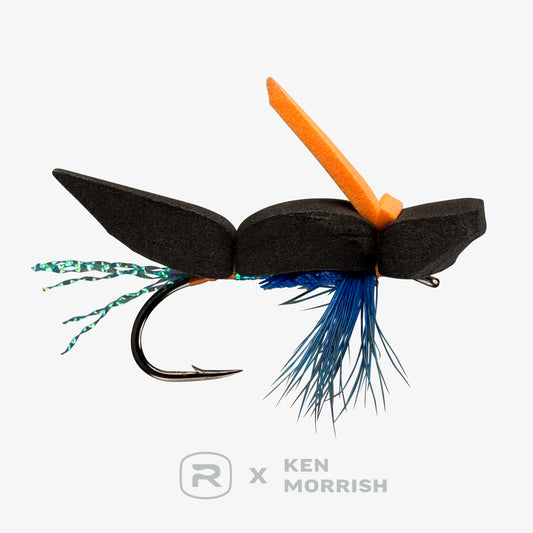
I waded into the first run we fished with a rather traditional Quebec style approach. I had a single hand seven weight rod, a floating line, and a buoyant green dry fly resembling a bomber. I flicked it around, dead drifting it for a while, but the water was big, and I soon became frustrated that I was not covering enough water quickly enough. Dead drifting bombers to sighted fish is one thing, but blind fishing that way is horribly inefficient, especially when you do not know where the fish are holding. With that in mind, I switched to my beloved black foam Pom Skater, which has been my go-to steelhead skater for more than 20 years. Our guide, David Hartlin, looked at me a little funny, but fortunately he was way over on the progressive, open-minded end of the Quebec guiding spectrum. In other words, most guides in the northeast have very traditional preferences in terms of flies and methods, and new ways of doing things are not met with much enthusiasm. When I started to aggressively pulse the steelhead skater with my rod tip as it swung, I got another subtle questioning look. I gestured back to just give it a minute and see if we might learn something. Four casts later, the skater pulsed into a seam on the outside of a boulder, and a good sized nose subtly popped up and took the fly down. I set, and before I knew it, a fish I guessed at 11 pounds did a wild upstream cartwheel, turned around, made a quick downstream run, and popped off. It was quite a welcome to the Delay River.  

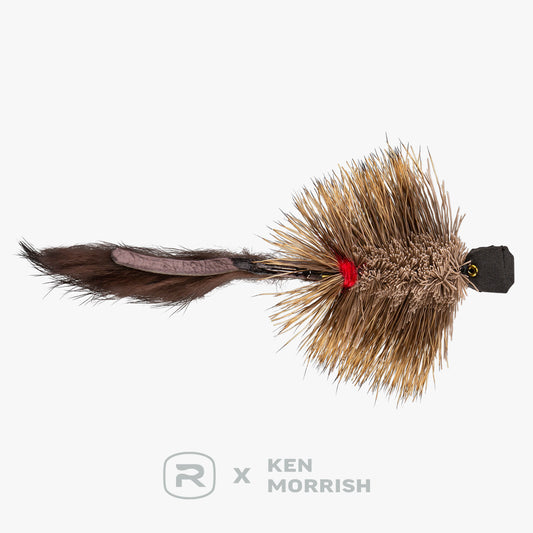
On my way downstream to check in with Charles, I stopped to fish a soft little bay where a tributary stream entered the main river. David had told me there would be some big brookies in there and he was right. I moved a number of fish on the skater and ended up taking my two personal bests, both in the 19 to 20 inch class. While there is not a lot of this type of water on the Delay, when you find those places in the first half of the season, the brookies will be there and they are typically very happy to attack RIO's Morrrish Mouse 2.0 pattern. 

I fished behind Charles for a while to no avail and then sat by the boat waiting for him to finish the run. We had a cup of coffee and while doing so, a solid fish rolled in water we had both fished. Charles went in after and worked the water hard with nothing to show for it. I was getting impatient, which is a common shortcoming of mine, and hollered out something to the effect of, “That fish is long gone, let’s get moving.” Wisely, Charles ignored me, made two more casts, and then was tight to the fish. It was a nice nine-pound male with some color. The pressure was off, we had landed a salmon, and it was only day one.

As our time on the Delay progressed, we came to several conclusions. The first was that the river was rising each day, and a spot you liked one day would likely not fish properly the next day. This meant looking at the river with fresh eyes each day and trying to find water that had the right speed, depth, and structure. Another conclusion was that each day there was a lot of water that met the previous three criteria, mandating that we cover water quickly in hopes of finding fish. Once we found fish, slowing down was in order. Charles primarily fished wet flies, and I primarily chugged dry flies. Both methods worked well. Likewise, color did not seem to make much difference to the fish. The hard part was finding them, and the easy part was catching them once you found them. Because the river is broad and shallow, you really had to work the river as opposed to parking at an obvious pool or bucket.

With that said, there were a few obvious runs where long flats met modest rapids. On river right of the first rapids above camp, Charles and I consistently found fish despite the river rising three feet over the course of the week. Our guide named that run Oregon, and while it looked and fished differently each time we visited, it continued to produce.

Because Charles and I were both strong waders and good with a Spey rod, we covered more water than the other guests and as a result, we caught more fish. Most of the guests caught a fish a day. I think I had a dozen fish for the week, and Charles might have had 15. Roughly 60 percent of our fish were grilse in the 4 to 6 pound range, and roughly 40 percent were in the 8 to 14 pound class. Interestingly, my best and brightest fish came on the dry, but then again, I fished the dry a lot of the time. The other big difference between Charles and me was that he was seemingly immune to black flies, while I fished with a head net virtually the whole trip. Most of the other guests also struggled with the bugs, but not Charles. His hat would be covered with black flies, but there would not be a single one on his face.

What was your go to tackle setup for the destination?

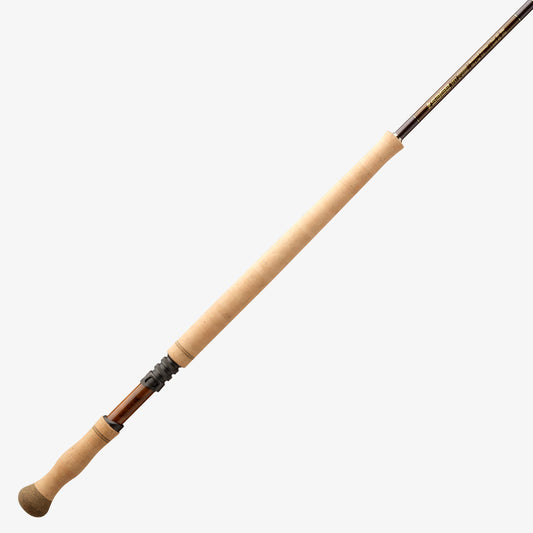
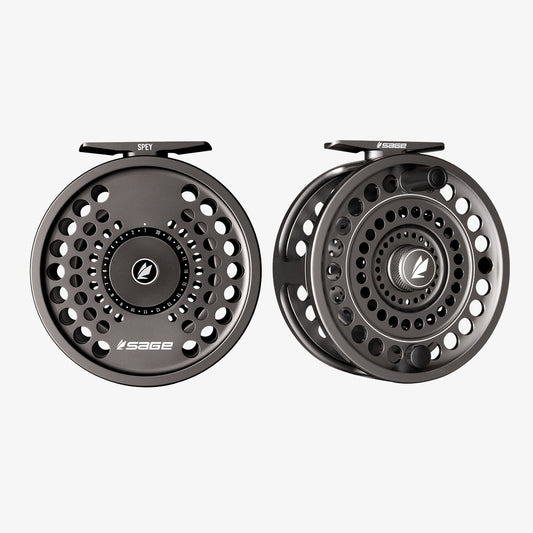
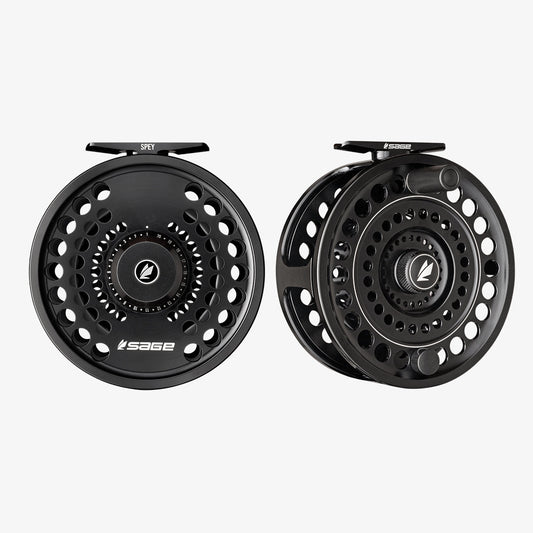
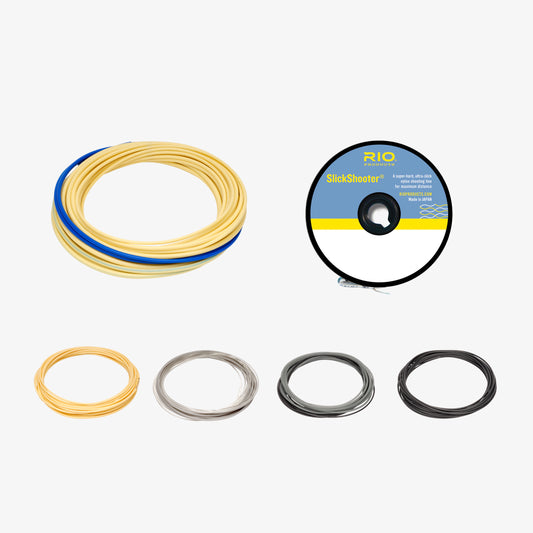
My go to setup for the trip was the SAGE SPEY R8 7130-4. The length and line weight were perfect for the river, and I fished it with a matching RIO Elite Scandi MDC-Kit Short. I almost exclusively fished a floating tip, but at one point I put on a slow sinking tip to creep my fly under the quick surface flows of a large incoming tributary. I hooked what I suspect was the largest fish of the week there, but the fly pulled loose after a few minutes. While I do not think tips are very important for the system, I liked having options, and it paid off in this particular spot. I fished the SAGE SPEY II reel in the 6/7/8 size. It is a really nice piece of gear that continues to impress me.

I fished a wide range of traditional and unconventional salmon flies, all of which seemed to work, but my two favorite flies were both steelhead style skaters that I designed for RIO Products. I like to fish them in a pulsed or chugging fashion.

What was your accommodation and meals experience like?

Delay River Lodge is simple and well-built. In 1997 it cost over 2 million dollars to build and required 347 DeHavilland Beaver loads to complete. There are two guest cabins with three rooms in each, basic painted plywood walls, simple beds, and shared bathrooms. While the rooms could not be simpler, both cabins have lovely shared living rooms with couches, wood stoves, and small kitchen areas. The main lodge has a large dining room table, couches, and a fireplace. It is a fishing camp in the truest sense, but all that anglers need.Meals were hearty and good, and expected to be even better in the coming season.

My takeaway is that the Delay is a special, wild, and remote system where folks have a very legitimate chance of one to three wild Atlantic salmon per day. While those numbers might seem modest, they are actually on the high end of current wild salmon catch rates. I feel the system is best for folks who are skilled with a two handed rod, like to cover water quickly, and have respectable wading skills.

Delay River Current Availability

The Delay River had been hiding in plain sight. The reason being the lodge and their extensive beats of water had been in private ownership for decades and largely underutilized during those years. Be among the first to experience this fishery.

2026 Availability:
July 24 - 31: 4 spots open
July 31 - August 7: 2 spots open
Aug 21 - 28: 8 spots open
August 28 - September 4: 8 spots open
September 4 - 11: 6 spots open

Rates:
July and September $11,000 CAD per person plus taxes
August: 12,000 CAD per person plus taxes

Single room upgrade $500 CAD plus taxes

LEARN MORE

Contact Ken Morrish

Ken is a fourth generation fly fisher who has guided throughout Alaska, Oregon, and California. He has taught hundreds of students the fundamentals of the sport, managed fly shops, consulted with leading fly rod manufacturers and designed an extensive line of popular fly patterns produced by RIO Products. Ken is an accomplished writer and photographer whose work has appeared in most major fly fishing publications as well as dozens of fly fishing books including Lani Waller's A Steelheader's Way. Additionally, Ken is an ardent defender of the Pacific's anadromous fisheries, as well as a past board member and current ambassador for the Portland-based Wild Salmon Center.

Contact Ken