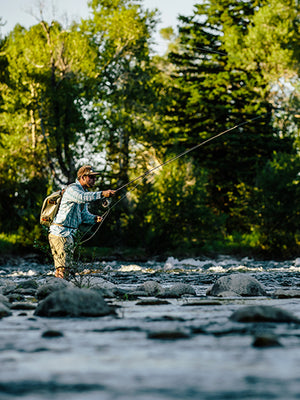
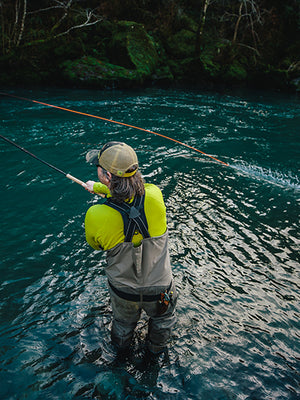
When it comes to understanding how fly rods truly perform, few voices carry the weight of Richard Post. A longtime guide, shop buyer, and reviewer at Telluride Angler, Richard has cast, tested, and dissected more premium rods than most anglers will ever hold. He’s not just a skilled caster—he’s a teacher who can break down the mechanics of rod performance in a way that makes sense on the water. In this conversation, Richard shares the journey that brought him west, the lessons he’s learned as a guide, and practical advice that every angler can apply to improve their fishing. Whether you’re working on your casting, refining your line management, or just looking for inspiration, his insights are worth reading start to finish.
Community
Guide Mindset | Origins and Insights with Sage Elite Pro Richard Post
Matt Otepka
October 01, 2025
Sage: What was the journey that brought a North Carolina boy out to the Rocky Mountains and was fly fishing a part of that decision?
Richard: I grew up in central North Carolina and have been eaten up by the outdoors my entire life. My earliest obsession was trying to catch a bass on my great uncle’s farm pond with an artificial lure, but we also had a 9-foot Eagle Claw gold glass 7 weight with a blue Martin automatic reel. My Pop had given it to my Dad before I came along, and there were about a dozen little cork poppers in a tray of Dad’s tackle box. For the life of me I cannot remember why or what intrigued me about the fly rod, but I began to take it out and was soon roll casting my way into a mess of bluegill.
During high school I had an opportunity to go on a camping trip out west. We left from North Carolina and drove all the way out to Highway 1 on the California coast. Colorado, the Grand Canyon, Yosemite, California, the Pacific Ocean, sequoias and redwoods, pronghorn, San Francisco, LA, Chicago, the great stretches of desert, the rolling prairie seas, and more stars at night than I ever knew existed. I was smitten and I knew that I would shape my life to be around the places and do the things that made me feel big and free and more alive than I had ever known.
After that camping trip in my junior year of high school, I knew I was going to college in the mountains of western NC. I picked Appalachian State in Boone, NC and set out to get myself a degree and experience every bit of outdoor life that I could. I had an older buddy with a raft, and I was able to set my class and work schedule to have every Tuesday completely off and most Thursdays for my last two years. We floated the Western Tennessee tailwaters religiously. I made my grades and graduated with honors, but I had gotten damn close to getting my doctorate in trout fishing.
When it came time to do something with my life, in 2009 I loaded up my old Jeep with a U-Haul trailer. Bike and skis on the roof, the trailer festooned with my canoe, I pointed it west and eventually landed in Crested Butte, CO where my best friend from school had a rental locked down and job waiting for me.
Sage: When did you first start working in fly shops and how has your career evolved over the years?
Richard: After a few years of working seasonal jobs that could revolve around and support my year-round outdoor pursuits, I made my way to Telluride. In 2012, I committed to my fly fishing passion and got a job at Telluride Angler fly shop and Telluride Outside guide service where I still proudly work today.
Up until that point I had never worked or guided in the fishing industry, though I had picked up a decent amount of experience in whitewater, backpack and alpine guiding in college through outdoor programs at ASU and an outfitter in Boone. Guiding came very naturally to me, I liked taking people on trips and teaching them something. It challenged me and it required me to focus in a real way to keep everyone safe. I was used to interacting with people outside in a professional setting, so guiding wasn’t new to me, but the first time I took someone on a guided fishing trip I felt like a duck in water. Man was I excited, it played out exactly as I had planned and it just felt so damn cool to be doing that for my job.
Eventually, I stepped into a buying and managing role at the shop under the tutelage of John Duncan. At this time, John and I may have been the only two full-time fly shop staff. John taught me how to talk about fly rods. Not just the language, but how to take my ideas and thoughts and use them to help fly rods make sense to people. He taught me how to really cast too. I was a very good fly caster when I showed up, but just an unpolished caster with natural ability. John taught me how to understand what was happening during the cast mechanically. How to break down the parts to make the rod operate at optimum and understand what my actions imparted on the rod.
In November of 2022, we moved into a new fly shop space and out of the little cinderblock building with the chicken wire wader shed. I moved into a role as the buyer focusing on all the ordering and inventory management, as well as gear reviews and articles, video projects, guiding, sales rep meetings, and raising a little fly fisherman of my own.
It is a team effort at Telluride Angler, from the owners to the summer shop staff, everyone is very hands-on, and a lot of us do a number of different jobs for the company. The owners support us when family calls, they’re concerned about our future, and I am grateful to be a part of the company. I feel like I work for the best fly shop and outfitter I ever have encountered, and it happens to be in a picturesque outdoor recreation hub like no other.
Sage: You and your mates at Telluride Angler are known for some of the most comprehensive and objective gear reviews in the industry. You’ve used and reviewed most of the Sage rods made during the last decade, not to mention premium rods from all the other manufacturers. In that time, what general trends have you noticed with respect to performance and what is it about Sage that stands out to you?
Richard: I started working in the fly shop when the Sage ONE rod was still in its first year of production. At that time, the chase for rod designers seemed to be how fast you could make the rod. Lighter and faster with an emphasis on power and performance. Tapers were steeper and the materials available called for a little extra to buoy that steep taper. When the X rod was released in 2015, it was a paradigm shift in my opinion.
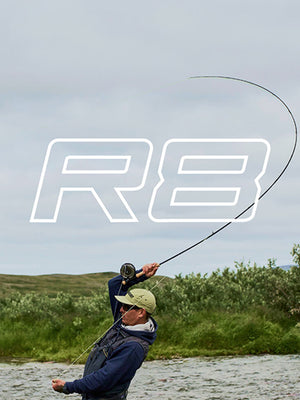
Lightness in hand has been a steady theme in fly rods and they keep getting lighter. I’m noticing a small trend against this, where some rods are keeping weight in places to achieve a specific action. The strength of the new carbon materials and resins allow rod makers to use less and achieve more. In today's moderate rods, we're seeing exceptionally smooth tapers that match the recovery speeds of the graphite. You can get a deep, smooth bend without the tip tracking off plane. They really emphasize and savor the bend. The CLASSIC R8 is a great example of this modern style applied to moderate action.
While fads will always come and go, the stuff in our sport that remains are the basic things. I believe a 9 foot 5 weight is and always will be the most popular length and line weight and it should be everyone’s first proper fly rod.
Sage: Aside from comparing rod technologies and performance levels as well as managing the shop, you’re also out on the water guiding clients. What is the most rewarding thing about that part of your job?
Richard: Guiding does a lot for me both personally and professionally. I believe that my time working on the water validates my opinion when I’m working in the shop and writing about equipment for our website. It also provides me with a measured and necessary dose of humility. It is hard work, especially if you’re doing it well and working towards a fishing guide’s mission: to make your client the absolute best angler they can be.
When I’m guiding, I focus on finding fish my clients can realistically reach, not just where I know they are laying. I push them beyond what they think they can do, but only after I’ve seen what they’re capable of—watching their casts, noting their strengths, and setting them up for success. Often, I’ll place them in a situation they believe is over their head, but I know it’s within reach, and we’ll work that fish until it eats. Along the way, I emphasize line position and angles, showing how the rod is a tool to be used, not an obstacle. The best part is seeing doubt turn into confidence—that moment when a client who thought “I can’t” ends up staring at a net heavy with both fish and newfound belief. That feeling never gets old.
When everything is firing—when the person on the oars and the people holding the rods have a collective thread of focus—it’s hard to call it work. I am working, but I’m also belly laughing, floating down a river in my boat, pointing out a bald eagle, talking philosophy and parenthood. I still think it is a pretty cool job.
Sage: Colorado offers an embarrassment of riches with respect to trout opportunities across a calendar year. In your little corner of the state, how do you break it down?
Richard: There isn’t a day of the year that I won’t do a fishing trip for the right people on the right piece of water. I’m up early every morning regardless of what is on the docket for the day. I just like to get up before the sun and get moving. It is very rare that two of my days look exactly alike, so my routine is more about adapting to what’s going on that day than keeping to a schedule.
I always get the itch to fish in January, and that will generally happen on the Lower Gunnison after a duck hunt. Around Valentines Day, the San Miguel will start to fish and I’ll sometimes stop to wet a line on the way home from skiing. By March more walk and wade opportunities are opening up and the Lower Gunnison starts to see the BWOs that will hang around until early May. In April, my local lake is iced off and we're there throwing streamers or wading the Dolores River. May is when the water starts to come up with the Dolores running off first and the San Miguel usually about three weeks behind it.
June is my favorite month for the dry fly. There are a lot of different things happening in our surrounding area at this time, just not on the San Miguel or Dolores in the immediate Telluride area. The Dolores is usually ready for early fishing in mid-June and the San Miguel in early to mid-July. The Lower Gunnison begins firing as soon as the water comes down on the North Fork. This is my favorite time to fish that stretch with high water and eager trout scarfing down sallies from the banks.
My lake starts to slow down in August and my big brown sight fishing takes a break. Tricos make a big appearance on the Lower Gunnison, the San Miguel and Dolores freestone dry dropper fishing is good, the creeks are just right, the alpine lakes are happening, and afternoon rains often cool things down. September sees the temperatures dropping and any piece of water that slowed down in the August heat is back to fishing well. September fishes more like the best parts of early summer around here, albeit with smaller flies and lower water.
Flannels come out in October, along with streamer rods and the return of the BWOs. The caddis tend to come off well in the evenings on the Lower Gunnison and this is my favorite time of year for the trout spey. November fishes pretty well until Thanksgiving on most of the freestones, and streamer fishing on the Gunnison can be lights out from the National Park all the way to Delta.
Sage: If you could only pick up one Sage/RIO set up for a day on your home waters, what would it be and why?
Richard: How about I tell you what’s in my truck right now?
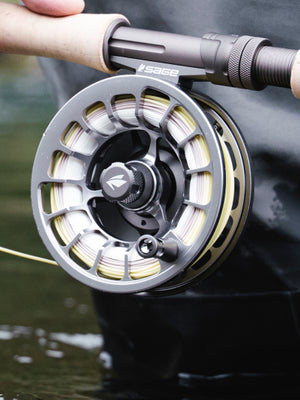
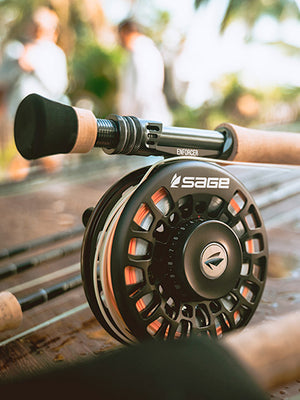
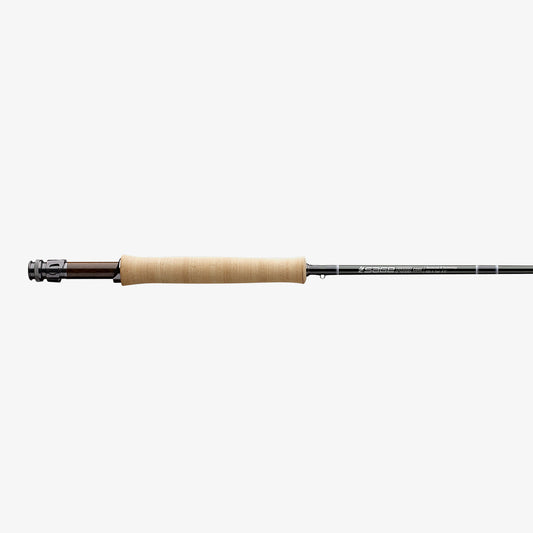
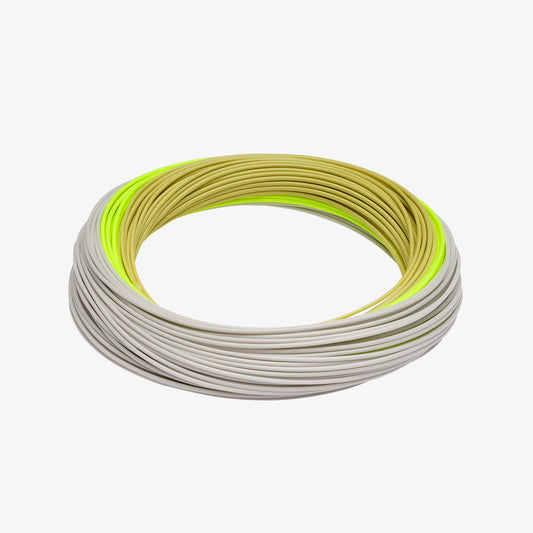
Sage R8 CORE 590, RIO Elite Gold XP WF5F, Spectrum LT 5/6. I have not been able to set this combination down since I put the RIO Elite Gold XP WF5F on there. It is a perfectly matched and balanced outfit. Completely tuned to the rod and engaged at every distance. I like this rig as much with a grass hopper on a 9’ 3X leader as a do a #22 BWO on a 16’ 6X leader. Intuition is unmatched, I look, rock it back, come forward to a stop and my flies land where my eyes directed them.
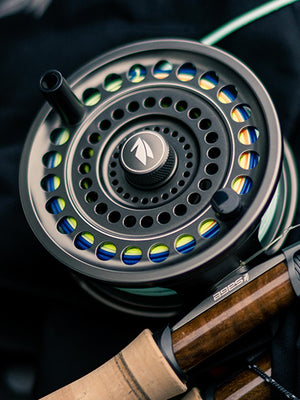
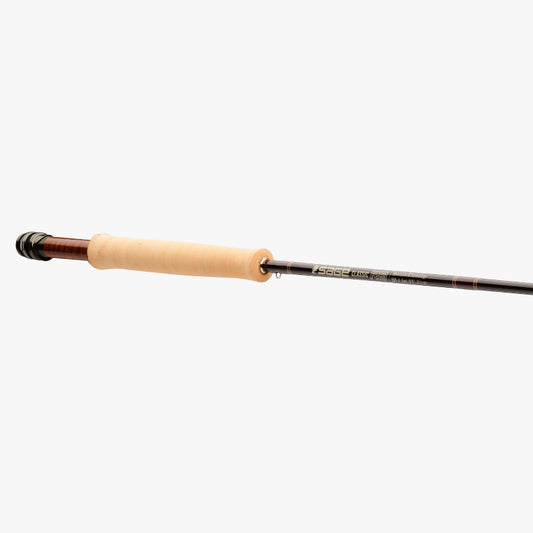
Sage CLASSIC R8 490, RIO Elite Gold XP WF4F, Spectrum LT 4/5. My go-to technical dry fly setup and the first rod rigged for the Lower Dolores. Lovely and confident with a 15’ leader and a tiny dry. Accurate, easy and a joy to blind cast a single small hopper. The classic aesthetic matches my mood and pace in these environs, a perfectly paced 9 foot 4 weight. I like the larger size of the Spectrum LT on these rods, the 4/5 over the 3/4 size. Those reels are so light and I like the balance and the larger arbor offered.
Sage CLASSIC R8 586, RIO Elite Gold XP WF5F, Spectrum LT 4/5. The rod that lives on the dash board in a rod sleeve all summer. I love the lightness of this 5 weight and its ability to really cast a bushy dry dropper without collapsing the loop. The action is playful and just right for my impromptu freestone fishing on the drive home. This rod serves double duty as a single hopper rod from the boat. The shorter length and aforementioned lightness make it a treat to cast all day long. I often have this rigged with a single hopper and the R8 CORE 590 rigged with a small- to mid-sized double dry rig with the little fly in front of the bigger fly.
Sage: What’s the best piece of guiding advice you’ve received? And what would you tell a young Richard Post just starting his guide career?
Richard: Frank Smethurst, longtime Telluride Angler guide, fly fishing personality and friend, said, “You cannot control the fishing or the weather, but you can control lunch.” I took this very literally early on in my career. It has little to do with lunch—though a good one shows you put in some effort—but is more about controlling what you can. You cannot control how the fish choose to play, but you can make sure your trailer bearings are greased, there’s a spare tank of mix for the outboard, the cooler is iced, rods are rigged, beer cars removed or hidden in the bed of the truck, they have their licenses, those sorts of things. Strive to be efficient, prepared, flexible and amiable.
Sage: Any words of wisdom for anglers that want to up-level their fly game?
Richard: These are what I consider to be the fundamental elements for all fly anglers:
-Work towards being efficient (e-fish-ient) while fly fishing. It encompasses all aspects of the endeavor with the main idea being that seconds you save by efficiently accomplishing all the little tasks will come back to you in the end. Either that's more time with a fly on the water or it's the freedom to sit back and spend a few minutes simply enjoying the natural beauty around you.
-Line management. Treat line management like a grass fire, swift and immediate attention and constant vigilance. There are some tricks and devices you can use, but none of them will solve the problem of lazy line handling. Line management should be as difficult as tying your shoes and keeping them tied.
-Fly management. In short, know where your fly is at all times—from the moment the fly is affixed to your leader until it is removed and placed back in your box. If you don’t see where your fly lands on the water, make adjustments until you do. Stop your cast higher, shorten your leader, lengthen your leader, fish a brighter fly behind the smaller fly that you can see, or in front. If it’s starting to sink, squeeze out the water and get that shake ready. It’s hard to see them eat the fly when you can’t see the fly or at least know where it is.
-Patience. This is the main thing that separates a fisherman from an angler. Taking a few minutes to look at the water and see what you notice makes a big difference and it allows the disturbance of your entrance to mellow out. If you notice something give it another minute, then make your best cast.
-Fly casting. Learn how to use the rod as effectively as you can. Make concerted efforts towards this goal and the fly rod will become an aid in fishing and not an inhibitor. Figure out your abilities and fish within them. This will help you grow in the sport more than anything. It is easy to make small improvements from a sound base. Find your comfort range and increase it by an extra turn of line pulled from the reel when you can. Pretty soon, that will be your new comfort range if you work at it.
-Practice. Do it in the yard, in a park, on some water is the best. You don’t need a hook, just a little yarn. Set yourself up some targets and walk around trying to hit them from different angles. Walk around with your rod, get used to moving it in and out of places, get comfortable with the length and putting it together and taking it apart. Tie knots, learn them, practice them, revisit ones you tie in special circumstances or infrequently.
-Get a mentor. This is the most important thing I can suggest, and it will do more for your understanding of the sport than anything else. If you’re fortunate, it will be someone with experience and willingness to teach, but it could also be someone who has an equal lack of understanding as you. Share the experience and commiserate over the challenges to work them out together.
Sage: What do you want people to know about your fishery?
Richard: Our area Trout Unlimited Chapter, Gunnison Gorge Anglers, absolutely kicks ass and gets things done. In Telluride, the valley floor project has been going on for ten years and the improvements to the river, fish, wildlife, and stream ecology are numerous and obvious. When I moved to Telluride in 2012, the San Miguel ran dead arrow straight from the western edge of town for better than a mile through a perfect mountain valley. The miners straightened the course of the river to better exploit the resource. You would still catch fish below and above this section, but rarely would you see anything in that long sterile straightaway. Work began in 2014 and the next year I walked the fresh serpentine riverway and saw spawning browns. It fishes remarkably better and than it did fifteen years ago (where can you say that?) and the work continues as I write. I believe that my son will grow up fishing a section of river that is going to get better every year, I’m thankful for that and thankful to have witnessed the improvements firsthand.
Sage: If you’re not stalking Rocky Mountain trout are there other waters or species that you’re obsessed with catching on the fly?
Richard: Right now, steelhead are kind of screwing with me, but I reckon they always are if you’re into that kind of thing. I like the things you must figure out with a sound foundation of earnest learning and humble effort. I haven’t gotten to that next level understanding with spey fishing like I have in other fly fishing disciplines. That keeps me almost edgy with not knowing. The casting is intoxicating and I love to cast. I adore the two handed cast because of the different nuances you must possess and understand.
I haven’t done all the flats fishing, but I’ve done a fair amount and the bulk of it without a guide. I know enough to look in the right places for the right things. DIY permit and walk and wade flood tide redfish are my saltwater itches right now. The permit because I haven’t landed one yet DIY, though I’ve had enough eats, opportunities, refusals and lost fish to keep me coming back. Redfish are kind of my favorite because I grew up around them and they’re a shorter flight these days. Flood tide on foot requires a lot of boots-on-the-ground knowledge and the mud price to pay during your schooling is mighty high. You must know the environment so well, down to the minute just to get in and out of those spots and I love knowing a thing.
Sage: What didn’t we ask or what might people not know about you?
Richard: Something about a fly fishing guide that few realize: fly fishing guides are among the most patient, welcoming and understanding individuals you will ever meet. Ask yourself this question, when was the last time I met a complete stranger, picked them up in my vehicle, spent 4-12 hours not further away from them than when they were in the passenger seat, fed them lunch, kept them safe, taught them a new skill, in a place that is known and often special to you and dropped them back off? That is what we do y’all. It is a testament to the easy going and accommodating nature of fly fishing guides that none of these situations make the news.
Shop Richard's Colorado Setups
-

Multi-Application
R8 Core 590-4
All Around Trout
Regular price $1,100.00Regular priceSale price $1,100.00 -

Dry Fly
CLASSIC R8 490-4
All Around / Light Presentation
Regular price $1,100.00Regular priceSale price $1,100.00 -
-

Dry Fly
CLASSIC R8 586-4
Short Range / All Around
Regular price $1,100.00Regular priceSale price $1,100.00
1
/
of
4