Welcome to your Fly Water Travel trip guide. We’re excited to help you prepare for your upcoming adventure! Inside, you’ll find everything you need: your to-do list, travel logistics, destination notes, and a curated tackle guide tailored to your trip.
Getting Ready
We’ve created a quick checklist of essential tasks to make sure you’re fully prepared for the journey ahead. If questions come up or you need anything at all, just give us a call, we’re here to help every step of the way.
To-Do List:
✓ Arrange flights to/from Honolulu, Hawaii
✓ Arrange flights to and from Cassidy International Airport, Kiritimati
✓ Arrange hotel in Honolulu for the night prior
✓ Complete your personal online guest registration form
Welcome to your Fly Water Travel trip guide. We’re excited to help you prepare for your upcoming adventure! Inside, you’ll find everything you need: your to-do list, travel logistics, destination notes, and a curated tackle guide tailored to your trip.
Getting to the Lodge:
For anglers traveling from North America and Europe, you will need to arrive in Honolulu, Hawaii no later than the Monday prior to your trip start date. There is only one flight per week to Christmas Island via Fiji Airways, departing Honolulu every Tuesday at approximately 12:00 p.m. For this reason, there are no viable same-day arrival options, so you should also book a hotel in Honolulu for Monday night. The return flight arrives back in Honolulu the following Tuesday by approximately 11:00 a.m. We highly recommend utilizing Ultimate Vacations in Honolulu, although you may also book directly through Fiji Airways.
Arrival Day:
Guests will be picked up upon arrival at Cassidy International Airport (CXI) and driven approximately 30 minutes to the lodge. Be prepared with $350 AUD to purchase your fishing license at the airport upon arrival.
Departure Day:
Guests will be driven to the airport early in the morning in time for the 7:00 a.m. departure from CXI.
Flight Notes:
Because you will be crossing the International Date Line, you will arrive on Christmas Island on Wednesday after departing Honolulu on Tuesday. Likewise, you will depart Christmas Island on Wednesday and arrive back in Honolulu on Tuesday.
Ultimate Vacations Contact Information:
Vanessa Vartanian – 313-539-2099 (cell)
International Travel Service & Ultimate Vacations
Monday – Friday, 8:00 a.m. – 5:00 p.m. HST
7192 Kalanianaole Hwy., Suite A-143A #302
Honolulu, HI 96825
Tel: (808) 526-2611 ext. 6 – ITS / (808) 949-8100 ext. 6 – Ultimate Vacations
Documentation Requirements:
To enter the Republic of Kiribati, you will need a current passport that does not expire within six months of your departure date. Currently, no additional visa or exit tax requirements are in place.
Currency:
The official currency of Kiribati is the Australian dollar (AUD), and we recommend ordering currency from your bank prior to the trip. There are a few ATMs on the island, but they are not always reliable. Additionally, the currency exchange at the Honolulu airport is frequently closed, so do not rely on exchanging money there if possible.
Electrical Requirements:
Christmas Island follows the Australian electrical standard and uses the Type I plug configuration, which features three flat pins arranged in a triangular pattern. The island operates on 220 – 240V AC power.
Communications:
While on Christmas Island, many cell phone providers offer service with international plans and rates applicable. There is typically good Wi-Fi at the lodge, which also allows for Wi-Fi calling. During busy hours, particularly in the afternoons when anglers return from fishing, the connection can slow down, but it is generally reliable enough for texting. Starlink service is now available at many lodges on the island.
Credit Cards:
The lodge now accepts credit cards, but we still recommend bringing cash, as many services on the island operate intermittently.
Travel Cash:
We recommend each guest travel with approximately $1,000 AUD per week to cover the fishing license, gratuities, beverages, laundry, and incidental expenses. Bringing a few hundred USD as backup can offer peace of mind should you run short on AUD. Larger denominations are acceptable, but make sure to carry enough $20 notes for smaller gratuities.
Gratuities:
The following are general guidelines, and all gratuities remain at the discretion of the individual guest. Guides should be tipped daily, as they rotate throughout the week. Remaining gratuities can be left with your hostess, Binatia Arebonto (Lisa), at the end of the week for distribution among the drivers and lodge staff.
Guides:
We recommend $40 AUD per person, per day when sharing a guide, or $80 AUD per day for solo anglers. This should be given directly to your guide at the end of each day.
Lodge Staff:
We recommend $80 AUD per person for the week. This can be given directly to the lodge manager on your final night.
Christmas Island Hostess:
We recommend $40 AUD per person for the week. This can be given directly to Lisa on your final night.
Boat and Truck Drivers:
We recommend $40 AUD per person for the week. This can be given directly to Bita, the head guide, on your final night.
Total Recommended Tip Allowance:
Approximately $400 AUD.
Fishing License:
Fishing licenses are not included and are typically purchased at the airport upon arrival. For 2026, licenses are approximately $250 – $350 AUD depending on current regulations and outfitter arrangements.
Cell Coverage and Wi-Fi:
Most U.S. carriers will have some level of service available, although AT&T currently does not. For internet access, Starlink satellite service is available at the lodge.
Power:
The island has 24-hour electric power supplied by the local grid and supplemented by onsite generators. While short outages are still relatively common, backup generators typically restore power within a minute or two.
Laundry:
Laundry baskets are located in each room and serviced daily for a small fee, typically around $3 AUD per item. Laundry is usually returned the following day, although rainy weather can occasionally delay drying times.
Beverages / Alcohol:
Beverages can be purchased at the lodge bar and added to your tab along with laundry charges, so there is no need to carry cash or small bills for these purchases.
Water:
The tap water is not safe to drink, but filtered or boiled water is available at every meal. Between meals and on the water, bottled water is provided, with additional bottles available for purchase at the lodge bar for approximately $3 AUD each.
Soft Drinks:
Soft drinks are available for purchase at the bar.
Beer:
Beer is available for purchase at the lodge bar, typically ranging from $4 – $5 AUD per can depending on the lodge and current supply.
Liquor:
Hard alcohol is generally not included and can be difficult to source on the island. Guests are encouraged to purchase liquor at the duty-free shops in the Honolulu airport prior to departure.
Emergency Medical Assistance:
Medical facilities on the island are extremely limited, and guests are responsible for any medical evacuation expenses that may arise. Guests are strongly encouraged to carry medical evacuation coverage.
Climate:
Christmas Island has some of the most consistent weather on the planet. Surrounded by water and located just over a hundred miles north of the equator, there is almost no seasonality. That is not to say the weather is always the same, just as conditions where you live can vary throughout the month. However, January and July are pretty much indistinguishable here. One common concern among first-time visitors is that it will be “too hot.” While the climate is certainly warm, it is rarely oppressively hot. Typical temperatures range from nighttime lows around 77°F to daytime highs near 88°F. Combined with lightweight clothing and the island’s nearly constant trade winds, most first-time visitors are pleasantly surprised by how comfortable the conditions feel.
Recommended Medical Evacuation Carrier and Insurance Provider:
A Global Rescue membership for medical evacuation coverage is highly recommended. There are little to no advanced medical services available on the island and only weekly air service back to Honolulu. In the event of a serious medical emergency, your options without evacuation coverage are extremely limited.
Global Rescue Contact Information:
Global Rescue LLC
Daniel Chomko
Channel Sales – Associate Manager
Email: dchomko@globalrescue.com
Phone: +1-617-459-4200
Here you’ll find everything you need to be ready on the water. You’ll find our preferred setups, favorite flies, recommended packing list, and notes on tackle available at the lodge.
Christmas Island Outfitters Tackle Overview
We always travel with at least three setups for this trip: a 9-foot 8-weight paired with a tropical or warmwater floating line, and a 9-foot 10- or 11-weight paired with a GT-style floating line. The third setup is a backup for your bonefish rod. A backup trevally rod is only necessary if you plan to make hunting trevally your primary focus.
Christmas Island Outfitters Provided Equipment:
There is no provided equipment or tackle, so please make sure to bring enough gear for the duration of your trip. For essential items, it is wise to bring backups where appropriate.
Christmas Island Bonefish & Trigger Fish Setup
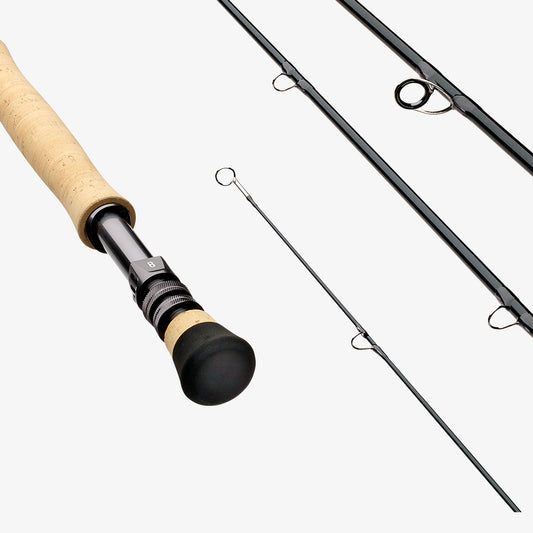
Fast-action 8-weight rods are the gold standard for fly fishing for bonefish, capable of handling everything from lightweight flies to heavy lead-eyed patterns. They are light in hand while still providing enough backbone for the fish you will encounter at Christmas Island. It makes sense to bring two 8-weight setups for bonefish in case of breakage.
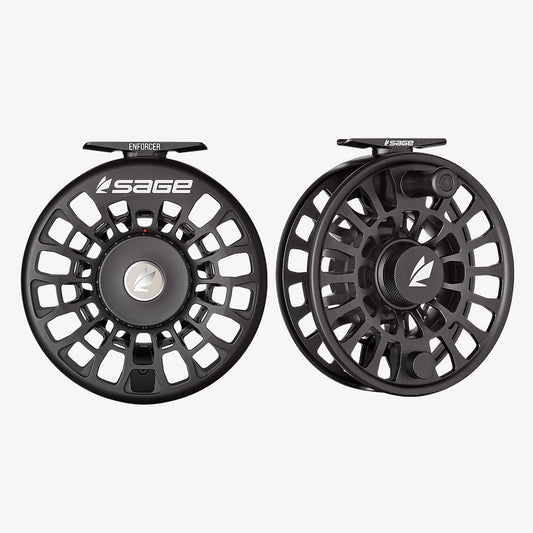
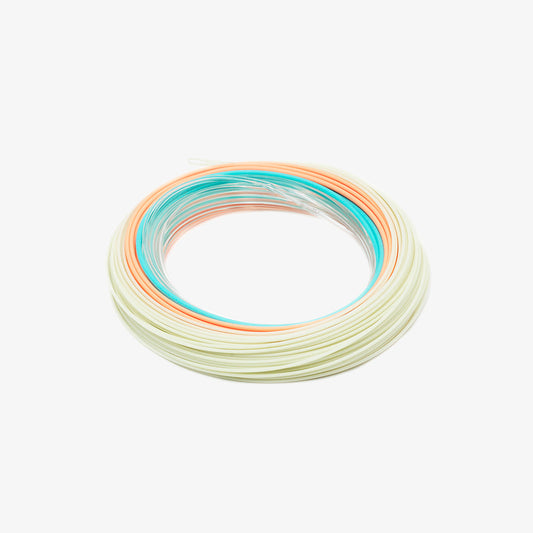
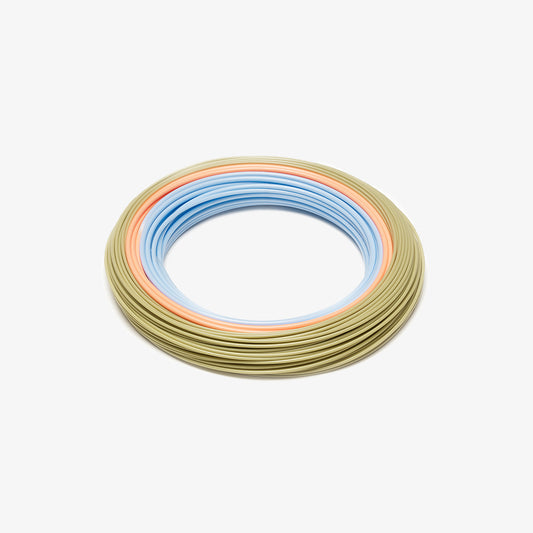
Tropical weight-forward floating lines matched with a fast-action rod are the best choice for Christmas Island. High-quality, durable anodized reels designed for saltwater use are highly recommended and should feature a fully adjustable drag system.
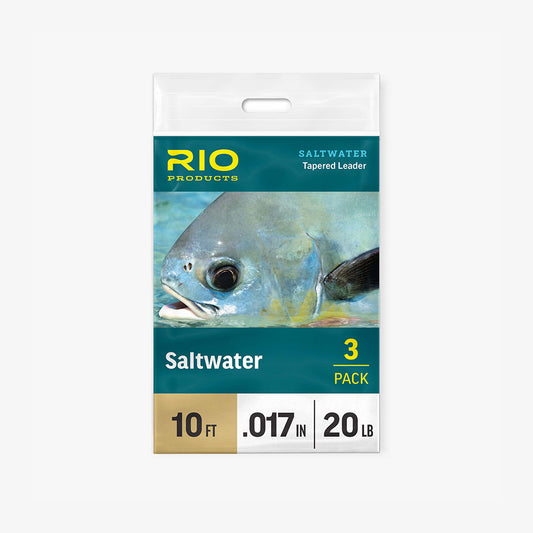
Leaders should be 10 feet long, designed specifically for bonefish, and tapered to a tippet diameter of .013 – .015. Fluorocarbon tippet material in matching diameters is also recommended.
-
Regular price $1,150.00Regular priceSale price $1,150.00 -
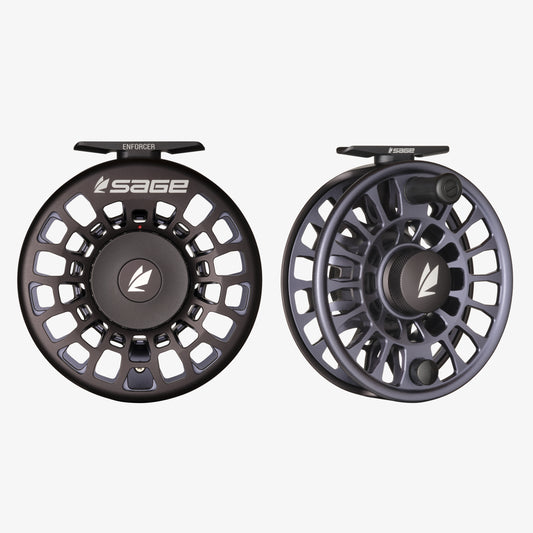
ENFORCER 7/8
Saltwater Specific
Regular price $600.00Regular priceSale price $600.00Sold Out -
Elite Flats Pro
All Around - Saltwater
Regular price $129.99Regular priceSale price $129.99 -
Saltwater Leader
Saltwater All Around - Go-To
Regular price $7.99 – $17.99Regular priceSale price $7.99 – $17.99
Christmas Island Giant Trevally Setup
Fast-action, powerful, and durable rods are a necessity for hunting giant trevally. This might sound counterintuitive, but choosing a lightweight option is even more important when considering rods in these larger sizes. Shots at GT's often come out of nowhere, so it is critical to choose a line with a short head and a strong core that is designed to throw medium to large flies into the wind.
For much of fly fishing, the functionality of your reel takes a distant third place to your rod and line. Not with these beasts. If you are lucky enough to connect with a GT over 20 pounds, you will rely on every bit of strength, durability, and drag consistency to successfully convert each hookup into a landed fish.
-
Regular price $1,150.00Regular priceSale price $1,150.00 -
ENFORCER 9/10
Saltwater Specific
Regular price $600.00Regular priceSale price $600.00 -
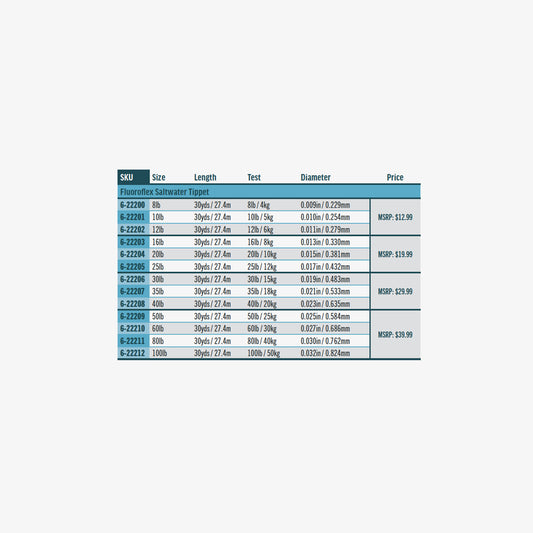
Fluoroflex Saltwater Tippet
Fluorocarbon - Spooky Fish
Regular price $14.99 – $49.99Regular priceSale price $14.99 – $49.99
Support Your Local Fly Shop
If you need assistance with assembling your gear for your upcoming travels, we encourage you to support your local fly shop. This curated list of tackle is handpicked for your destination by our experts and can serve as your shopping list to get your ready for your next adventure. Find your local Far Bank dealer.
Top 5 Flies for Christmas Island Outfitters
We recommend 4-6 dozen flies for the week. Colors: mostly orange, pink, tan, copper, and pearl. Note: During the full moon larger flies (#2-4) with large lead eyes are used often and during neap tide weeks smaller flies (#6-8) will be more popular.
Top 5 Bonefish Flies for Christmas Island Outfitters:
- Christmas Island Special - Pink, Orange (Size 4-8)
- Bonefish Gotcha - Pearl, multiple weights if possible (Size 4-6)
- Crazy Charlie – Pearl and Pink (Size 4-6)
- RIO's Simp (Size 4)
- RIO's Boney Foo Foo (Size 6)
Suggested Packing List
We understand packing for an adventure is not easy. On a remote trip like this it is very important to have everything you need and nothing you do not. As the climate is fairly predictable, and not susceptible to cold fronts, clothing should be focused on protecting you from UV light, with a focus on comfort and movement.
Wading Boots:
A sturdy pair of wading boots is essential. Some of the flats can be waded in sandals, while others are comprised entirely of dead and fossilized coral that can destroy lightweight booties. You will spend eight or more hours per day in these boots. This is one of the least exciting, but most critical, pieces of equipment you will bring with you. Choose a high-quality, great-fitting boot, you will be glad you did.
Boat Bag:
One boat bag. This does not need to be an actual boat bag, although those are very handy. Any medium-sized bag that offers compartments and some water resistance will work. This will accompany you on the boat or truck each day and act as a supply station for various items you would like to keep handy, but not carry on your person all day. Think larger fly boxes that you can refill pocket boxes from between stops, along with snacks, sunscreen, extra leaders, and tippet.
Fishing Bag:
One bag that you can wear while carrying enough tackle and essentials for a few hours. The most popular options are either sling-style bags or fanny packs. Waterproof and lightweight options both work, each offering its own advantages. This should have enough space, or a dedicated spot, for a water bottle as well.
Pliers:
Forceps, such as the Dr. Slick scissor pliers, work just fine for crimping barbs, releasing fish, and trimming flies for bonefish and triggerfish. A lightweight pair of saltwater pliers is also a nice option and offers extra assurance when removing hooks from a toothy GT.
Line Clippers:
Any standard line nippers will work.
Knife:
One medium-sized travel knife will come in handy at times.
Socks:
Two pairs of synthetic soccer-style socks are nice to wear inside lightweight neoprene wet-wading socks. Make sure to size your boots accordingly so they can accommodate both layers comfortably. Bare feet in flats boots are a recipe for crippling blisters.
Flats Shirts:
Hooded sun shirts are particularly important here. Christmas Island may have the most intense UV exposure of any location in the entire Fly Water catalog. Add to this the unique aspect of the wind blowing from the east 99% of the time, meaning each morning will have both the wind and the light at your back. A hood, Buff, and a good hat can essentially keep you in the shade for most of the morning.
T-Shirts:
Two or three T-shirts to wear around the lodge can be a nice break from synthetic clothing.
Pants and Shorts:
Our favorite combination is a pair of quick-drying shorts layered over synthetic leggings, such as Under Armour. This combination provides protection from the sun, cuts, and scrapes while minimizing splashing and resistance in the water. The shorts worn over the tights prevent you from looking like an elf and also typically provide a few handy pockets for additional gear.
Warm Layers:
A puffy jacket or hoody is nice for the plane ride and for when you arrive back home to whatever frigid weather you fled in the first place. This will likely only be used on either end of your trip and stashed away during your stay on the island.
Rain Jacket:
One high-quality, lightweight, breathable, packable rain jacket. Try to choose a color that is not overly bright, as flats fish have notoriously sharp eyesight.
Hats:
Two fishing or baseball hats.
Sun Gloves / Stripping Guards:
Two pairs of sun gloves, along with spandex stripping guards, can save your hands and fingers from both sunburn and line burn.
Lodge Shoes:
One pair of flip-flops or Crocs to wear on the plane and around the lodge.
Buff:
At least two Buff-style facial sun protectors.
Sunglasses:
At least two pairs, and possibly more. Fishing without polarized sunglasses is nearly impossible. Plan on a general-purpose lens color such as brown or copper, along with a lighter amber or yellow lens for cloudy or rainy conditions. A backup general-purpose pair can be critical in the event of loss or breakage. The nice thing is that these are likely the same glasses you would wear fishing almost anywhere else, so they will have utility well beyond Christmas Island. Do not forget a few lens-cleaning cloths as well.
Lip Balm:
One tube of SPF 30+ lip balm.
Sunscreen:
SPF 50+. We like to have at least one large bottle, along with several smaller containers that can be spread between your boat bag, sling or fanny pack, and even your pockets.
Camera:
Do not forget extra batteries and a waterproof case or bag.
Headlamp:
One small LED headlamp with extra batteries.
Snacks:
Assorted energy bars, nuts, beef jerky, and other snacks to supplement lunch. Electrolyte packets to add to your water are also highly recommended.
Baggies:
A handful of various Ziploc bags can be very handy for keeping snacks and smaller items dry and organized.
Toiletries Kit:
Toothpaste and toothbrush, deodorant, razor, lotion, mini shampoo bottle, Advil, liquid bandage for minor finger cuts, sleep aids, ear plugs, Band-Aids, antibacterial ointment, Benadryl, Gold Bond powder, seasickness medication, and antibiotics prescribed by your doctor.
First Aid Kit:
A small first aid kit for the inevitable cuts, scrapes, and other minor eventualities.
Water Bottle:
One reusable water bottle.
Contact Anil Srivastava
Anil Srivastava is a member of Fly Water Travel's Saltwater and Jungle Team and spends much of his time helping anglers prepare for their trips to Christmas Island. Contact us below to find out how we can help you book the trip of a lifetime.