Getting Ready

We’ve created a quick checklist of essential tasks to make sure you’re fully prepared for the journey ahead. If questions come up or you need anything at all, just give us a call, we’re here to help every step of the way.

To-Do List:

✓ Arrange flights to/from Buenos Aires, Argentina

✓ Arrange hotel and transfers in Buenos Aires, as needed

✓ Arrange flights to/from San Martin/ Chapelco, Argentina

✓ Complete personal online guest registration form and sign the outfitter's waiver

✓ Purchase medical and evacuation insurance

✓ Get travel cash

Getting to the Lodge: 
To reach Limay River Ranch, guests will need to arrange travel to and from San Martin de los Andes / Chapelco Airport, Argentina (CPC). All international flights connect through Buenos Aires (EZE).

Most international flights arrive in the late morning allowing guests to connect onward to Chapelco on the same day when schedules allow. Most flights to Chapelco depart from the domestic airport, Aeroparque Jorge Newbery (AEP) requiring a transfer from the international airport.

Arrival Day: 
Please book the earliest flight arriving into San Martin/Chapelco (CPC). An overnight may be required before your trip.

Departure Day: 
Please book a flight that departs San Martin around 12:00PM.

Note: please allow at least 4 hours to transfer between the domestic airport (AEP) and the international airport (EZE) in Buenos Aires.

Documentation Requirements: 
To enter Argentina, all guests are required to have the following: 

  • Passport: Valid for the duration of your trip. 
  • Medical and Evacuation Coverage: Valid for the duration of your trip.

Recommended Travel Agent: 
The domestic airline carrier in Argentina is notorious for changing and canceling flights, so to make things easier on our guests, we highly recommend using a travel agent when booking domestic flights within Argentina.  

Alicia Regueiro, Holdy Tours 
800-446-1111 or 925-927-6617 
alicia@holdytours.com  

Domestic Flight Note: 
Domestic flights within Argentina fly through either the Ezeiza international airport (EZE) or the domestic airport, Aeroparque Jorge Newbery (AEP).  

All domestic flights within Argentina prohibit carry-on baggage of fishing equipment (rods, reels, lines, flies, etc.) and must be checked. 

Buenos Aires Transfers: 
After arriving at the international airport (EZE) in Buenos Aires, clearing customs and immigrations (45 min – 1 ½ hour process), in most cases, guests will need to transfer to the domestic airport (AEP), to make the connecting flights within Argentina. The transfer between airports or to downtown hotels takes approximately 45 minutes, depending on traffic, however we recommend allowing four hours between flights. The following are transfer options:  

  • Tienda Leon – Located just outside of customs through sliding glass doors. Transfers can be pre-arranged online or arranged after arrival for approximately USD $40-$60 per person.  
  • Private Transfer – A private driver and/or driver and guide can be arranged through our recommended travel agent.   

Buenos Aires Hotels (Recoleta District): 
Intersur Recoleta 
Av. Callao 1764  

Four Seasons Hotel Buenos Aires 
Posadas 1086/88 

Loi Suites Recoleta Hotel 
Vincente Lopez 1955 

Arc Recoleta Boutique Hotel & Spa 
Peña 2155 

Buenos Aires Restaurants: 
La Cabrera
José A. Cabrera 5127   

Las Violetas 
Av. Rivadavia 3899 

Cabaña Las Lilas 
Av. Alicia Moreau de Justo 516   

Don Julio Parrilla 
Guatemala 4699   

Parrilla La Brigada 
Estados Unidos 465 

Currency:  
The official Argentine currency is the peso (ARG) however US dollars (USD) are accepted throughout the country and for gratuities. We recommend exchanging no more than $100 (USD) into pesos (ARG) for small tipping, such as baggage handlers, taxis or tips at restaurants, throughout your travels in Argentina.  

Exchange Options:
We recommend the following for exchanges.  

  • Airport Convenience Stores – Purchase something small using a $100 (USD) bill and change will be provided in pesos, which should be enough pesos during your travels.   
  • Hotels  
  • ATMs  

Travel Cash: 
We recommend each guest travel with 

  • $1,700 (USD) per week of travel
  • Bills should be new and in larger denominations, such as $50s and $100s   

Credit Cards: 
The lodge does not accept credit cards   

Gratuities: 
The following are guidelines, and all gratuities are at the discretion of the individual guest. Tips should be given to your guide at the end of each fishing day. Tips for staff can be given to the on-site manger or owner.
• USD $150 per boat, per day
• USD $50 per room, per night

Fishing Licenses: 
Included in package 

Electrical Requirements: 
A Type I adapter is needed throughout Argentina 

Communications: 
While traveling in Argentina we recommend using WhatsApp as this is the way most lodges and outfitters communicate. Texting through the app will allow you to keep in touch with the outfitter, friends, and family when connected to Wi-Fi.  

Cell Coverage and Wi-Fi:  
• Cell Coverage: Limited depending on carrier
• Wi-Fi: Available at the lodge

Laundry: 
Limited laundry service is available at the lodge.

Water: 
Drinking tap water at the lodge is clean and safe. Bottled water is available. 

Beverages/Alcohol: 

  • Soft Drinks: Included  
  • Beer and Wine: Included 
  • Alcohol: Included  

Climate:  
From November through March, Northern Patagonia enjoys warm, pleasant weather ideal for fishing and outdoor activities. Days are typically warm, with highs in the 70s to low 90s°F (20–35°C), while nights can cool into the 40s°F (4–9°C). Expect wind and light rain, especially in the spring and early fall. Layering and quality rain gear are recommended to stay comfortable in changing conditions. 

Emergency Medical Assistance: 
San Martin has a well-equipped medical clinic and hospital. Due to the remote nature of Patagonia, we strongly recommend obtaining travel insurance that includes emergency medical evacuation coverage.

Recommended Medical Evacuation Carrier and Insurance Provider:   
Global Rescue

Limay River Ranch Tackle Overview

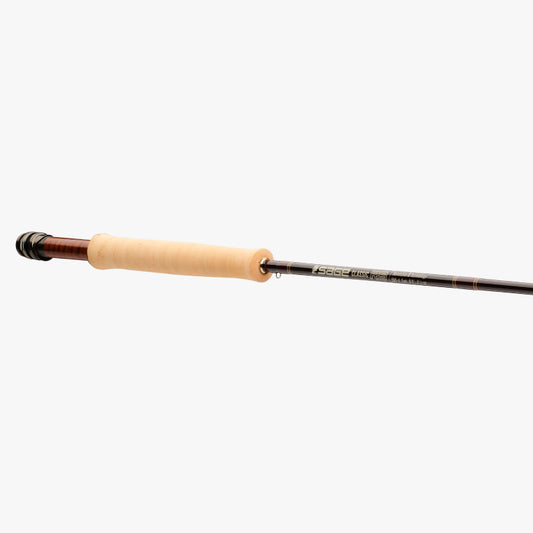
When fishing a river as diverse as the Limay, it pays to bring a variety of rods and be prepared to fish multiple techniques throughout the day. We recommend bringing 5-, 6-, and 7-weight rods to cover the full range of opportunities encountered during the week.

The 5-weight is the ideal tool for fishing the braided side channels and smaller water where delicate dry fly presentations are often required. It provides the finesse needed for accurate presentations while still having enough power to handle the region's ever-present wind. The 6-weight is the true workhorse of the trip, and we recommend a rod equipped with a fighting butt. This setup can comfortably handle everything from large dry-dropper rigs to small and medium-sized streamers while providing enough backbone to control trout in the Limay's strong currents. The 7-weight is the preferred tool for dedicated streamer fishing, offering the power needed to cast larger flies, penetrate the wind, and battle the river's notoriously large brown trout.

For anglers who enjoy swinging flies, an optional 5- or 6-weight trout Spey rod can be an excellent addition.

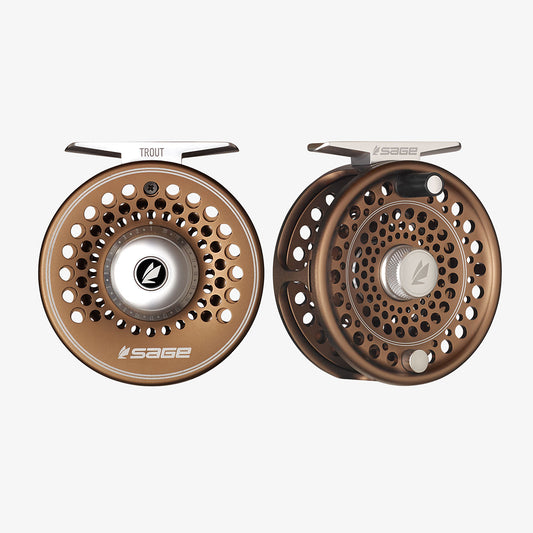
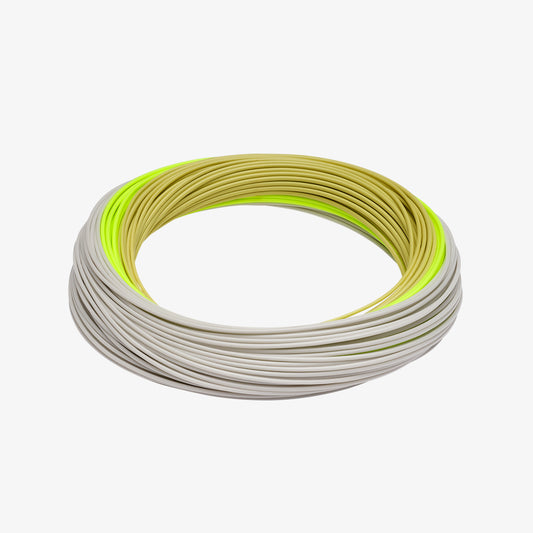
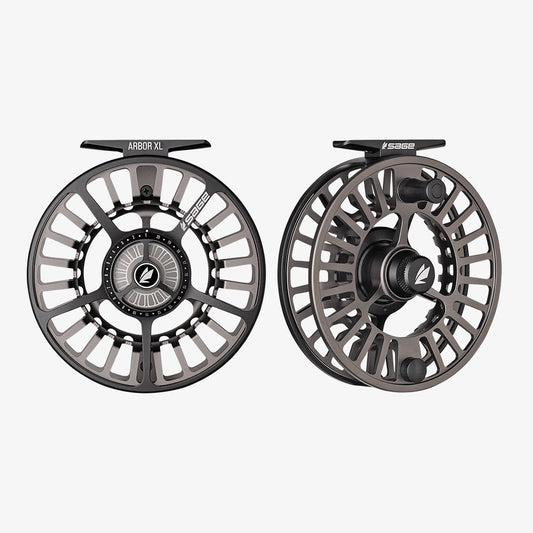
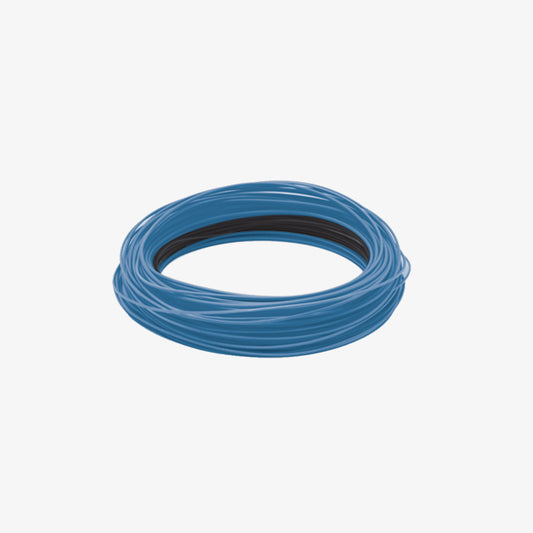
The 5- and 6-weight single-hand rods should be paired with reliable reels and weight-forward floating lines slightly overlined to improve casting performance in windy conditions. An additional spool for the 6-weight rigged with an integrated sinking line is useful for anglers who prefer to fish streamers on a lighter rod. The 7-weight should be paired with an integrated sink-tip line. It is always better to arrive overprepared than underprepared, and the lodge's drift boats offer ample storage for multiple rod setups throughout the day.

Limay River Ranch Provided Equipment: 

  • Rods/Reels/Lines: Included with prior notice
  • Flies: Included
  • Waders/Boots: Boots included, Waders not included

Note: Limay River Ranch has a limited supply of loaner equipment for guests to use while they are there based upon availability. Please let Fly Water Travel know if you plan to use the lodge’s equipment as the supply is limited.

Limay River Ranch Primary Setup

The 5-weight is the most versatile trout rod in Patagonia and handles everything from foam terrestrials to medium streamers with ease. It strikes the right balance between presentation and power, making it a dependable choice for both walk-and-wade days and drift fishing. A 5-weight has enough backbone to punch a fly through moderate winds without overpowering smaller dries. It’s especially useful when you’re covering mixed water types in a single day. Pair it with a ½ weight heavier floating line.

Recommended Terminal Tackle:

  • Fast action 9-foot, 5-weight 4-piece fly rod
  • Reliable reel and spare spool
  • 1/2 weight heavier floating line
  • 9-foot 3X and 7.5-foot 2X leaders (Qty 3 each)
  • Spools of 2X-4X monofilament and fluorocarbon tippet

Limay River Ranch Secondary Setup

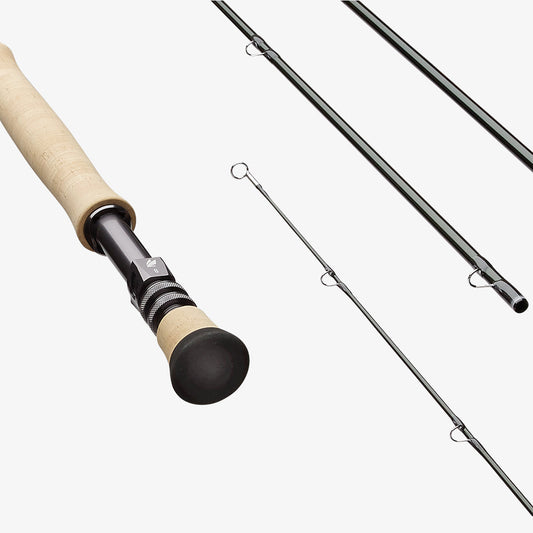
The 7-weight comes out when you’re hunting truly big fish, battling wind, or stripping full-size articulated streamers in deep runs. This rod weight provides the strength needed to drive large flies, sink tips, and heavier lines without collapsing the loop. Anglers chasing migratory browns and fishing this high-flow tailwater will appreciate the added leverage and fish-fighting power. Pair it with an integrated sink-tip in the 250-grain range.

Recommended Terminal Tackle:
• Fast action 9-foot, 7-weight 4-piece fly rod
• Reliable reel
• Integrated sinking tip line
• Spool of 0X or 12lb monofilament

Limay River Ranch Optional Trout Spey Setup

A dedicated trout Spey setup can be a highly effective and enjoyable way to fish some of the larger runs on the Limay River, particularly for anglers who enjoy swinging flies. We recommend a 5- or 6-weight two-handed rod in the 11½- to 12½-foot range, which provides enough power to cast efficiently across the Limay's broad currents while still offering plenty of sport when fighting the river's resident and migratory brown trout.

Unlike many trout Spey fisheries, the Limay is particularly well suited to long-belly floating lines, which allow anglers to efficiently cover water and make elegant presentations at a variety of distances. While long-belly systems are preferred, anglers should bring the line system they are most comfortable casting, whether that is a traditional long-belly, Scandi, or Skagit-style setup. Fishing techniques range from swinging small wet flies and traditional streamers to skating dry flies across the surface, and all can be effective throughout the season depending on water conditions and trout behavior. For this reason they should bring a variety of tips.

Recommended Terminal Tackle:
• 5 to 6-weight, 11.5-12.5-foot trout Spey Rod
• Reliable reel
• Long belly, Scandi, or Skagit with a variety of tips
• Spool of 0X or 12lb monofilament

Limay River Ranch Flies:

Flies are included as part of the program, but guests who would like to bring a small personal selection should focus on a few proven patterns that cover the main food sources found throughout the Limay River.

The Limay River supports a highly diverse trout diet, which is reflected in the wide range of flies guests should bring. Depending on the season, water conditions, and section of river being fished, trout may feed on small mayflies, caddis, midges, terrestrials, stoneflies, baitfish, leeches, and even mice. This is a large, varied river system, so anglers should be prepared to adjust throughout the day rather than rely on one specific hatch or presentation.

On the surface, the Limay can offer technical dry-fly fishing with small mayflies, caddis, and midge patterns such as Parachute Adams, Comparaduns, X-Caddis, Griffith’s Gnats, and Rusty Spinners. These patterns are important for calmer edges, slicks, seams, and selective fish feeding on smaller insects. At the same time, larger attractor dries and terrestrials are also valuable, especially along grassy banks, riffles, and windy shorelines. Patterns like Chernobyl Ants, hoppers, Stimulators, Madame Xs, beetles, crickets, and Golden Stones imitate the larger food sources that often bring aggressive fish to the surface.

Subsurface, nymphs are an important part of the program and should cover both large and small profiles. Rubberleg stones, Prince Nymphs, Pheasant Tails, Hare’s Ears, Copper Johns, soft hackles, and caddis pupae represent the aquatic insects trout feed on throughout the system.

Streamers also play a major role, particularly when targeting larger brown trout. Zonkers, Muddlers, Woolly Buggers, Matukas, Clousers, dace patterns, and leeches imitate minnows, small baitfish, and other larger prey.

Support Your Local Fly Shop

If you need assistance with assembling your gear for your upcoming travels, we encourage you to support your local fly shop. This curated list of tackle is handpicked for your destination by our experts and can serve as your shopping list to get your ready for your next adventure. Find your local Far Bank dealer.

Limay River Ranch Flies

The Limay offers a diverse mix of fly fishing throughout the season, with patterns changing as conditions and food sources evolve. Mayfly and caddis imitations are important during periods of strong hatches, while terrestrial patterns become increasingly effective during the warmer months. Large streamers are particularly effective later in the season, when larger trout become more willing to chase a substantial meal. Migratory brown trout can be targeted by swinging flies on light Spey rods or heavier single-handed rods, with large skaters and streamers fished from the boat or while wading.

Flies are included but if you would like to pack your own box, five of our favorites include:

  • Parachute Adams
  • Chubby Chernobyl
  • Poco Pelo
  • Soft Hackle Pheasant Tail
  • Gallup's Peanut Envy

Please feel free to call Fly Water Travel for assistance in putting together a selection of flies best suited to your trip.

Suggested Packing List

We understand packing for an adventure is not easy. On a trip like this it is very important to have everything you need and nothing you do not. As the climate is extremely changeable and a wide range of temperatures and conditions can be expected, we recommend layering clothes. Anglers should be prepared with thermal underwear, fleece/soft shell jacket, and a rain jacket. Synthetic fabrics are preferred to cotton. Dress at the lodges/camps is neat but casual.

Documents: 
Passport, plane tickets, itinerary, credit card, cash, business cards 

Waders:
Breathable stocking foot waders are recommended. For anglers prone to cold (especially feet), boot foot waders are excellent. 

Boots: 
Felt soles are permitted in Patagonia, but please ensure all gear is clean and completely dry before travel to prevent the spread of invasive species. Rubber soles without cleats are also an excellent option. 

Wet Wading:
One pair of neoprene socks with gravel guards and quick dry pants 

Forceps: 
We like the Dr. Slick scissor pliers for crimping barbs, releasing fish and trimming flies 

Clippers: 
One line clipper 

Wading Staff:
One wading staff and belt 

Socks: 
Four pairs of wool or synthetic socks to wear under your waders. Two pairs of camp socks.

Base layers: 
One to two pairs of synthetic or merino wool long underwear (tops and bottoms) to wear beneath your waders. One mid-weight and one heavyweight. These can be worn alone or together depending on conditions.  

Shirts: 
Two or three long sleeve fishing shirts. One or two lodge shirts. 

Warm Layers: 
One or two warm insulating layers. Down, synthetic or fleece mid layers are good options. Avoid cotton. 

Rain Jacket: 
One high quality rain jacket 

Hats: 
Two fishing/baseball hats. One warm cap. 

Lodge Shoes:
One pair of shoes for around the lodge and travel

Buff: 
One “Buff” facial sun protector (good for bugs too). 

Sunglasses: 
One pair of polarized sunglasses. It is great to have a lens cleaner and a soft cleaning cloth as well. 

Sunscreen: 
One bottle SPF 30+ 

Lip Balm: 
One tube of SPF 30+ lip balm 

Backpack: 
One waterproof backpack or boat bag for day gear 

Headlamp: 
One small LED headlamp with batteries

Contact Liam Donohoe

Liam was born and raised on the trout rivers of Idaho, where a lifelong passion for the outdoors eventually led him into the world of professional guiding. Over the past decade, he has built a career guiding and managing lodges across some of the world’s most celebrated fisheries, from Alaska’s Bristol Bay to Chilean Patagonia and the Rocky Mountains in Idaho.

CONTACT US