Who is best suited to this destination?
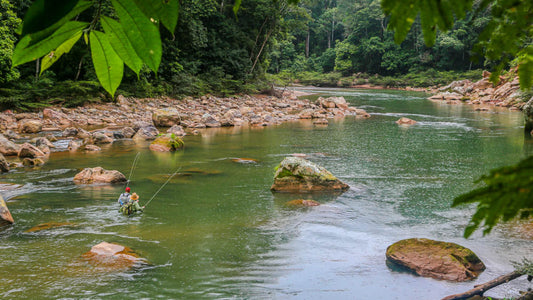
It is best if guests are in relatively good shape as some of the fishing at Tariquia Lodge is in a walk and wade fashion. Even though the majority of the fishing will be done while floating, the wading can be fairly challenging around the larger boulders found in the area.
Where is the lodge?
Tariquia Lodge is located on the Tarija River, about 30 minutes outside the town of Yacuiba on the southern border shared with Argentina.
How do I get there?
To get to Tariquia Lodge guests need to fly to Santa Cruz de la Sierra, Bolivia (VVI). In Santa Cruz guests will be met at the airport by a lodge representative and transferred to a local hotel (included in package). The next day guests will be met at the hotel and transferred to the civil airport where they will take a charter flight to Yacuiba Airport. A helicopter will then pick up guests for the short 30 minute ride to the lodge. At the lodge guests will settle in and get ready for their upcoming fishing days.
When should I go?
Tariquia Lodge is open during a short period of the Bolivian dry season from August through October.
How will I fish?
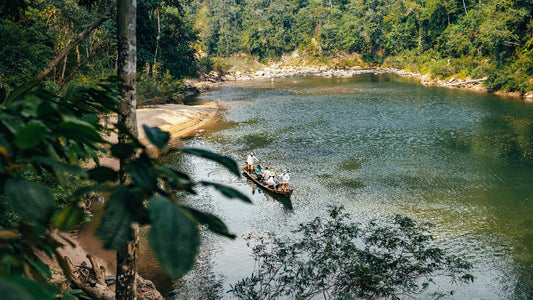
Guests will fly fish from comfortable NRS rafts as they float remote sections of the Tarija River. There will also be opportunities to wade around portions of the river.
Is there wade fishing?
Yes, upon request guests can expect about 40% of the fishing to be done while wading.
Where will I fish?
Guests will fish the main Tarija River. There are weather related scenarios where the feeder creeks may be fished as well.
How long does it take to reach the fishing grounds?
Guests can except helicopter rides from 10-30 minutes. The length of your ride depends on the beat you are assigned for the day.
What type(s) of fish will I catch?
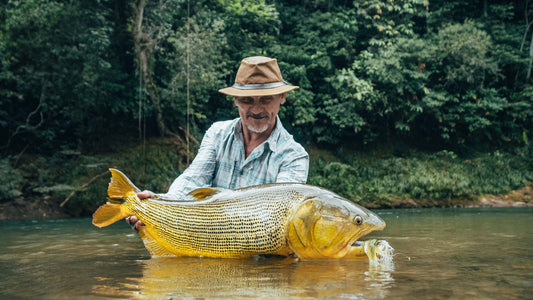
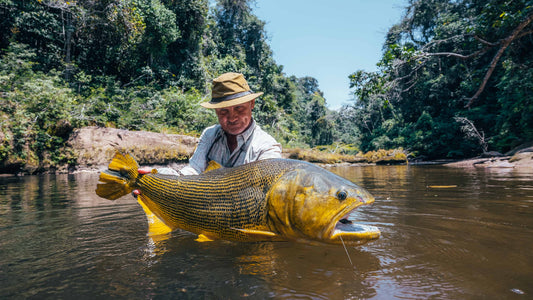
Unlike the variety found at the Tsimane programs, Tariquia’s sole focus is golden dorado. This program was built to fly fish for some of the largest dorado in Bolivia.
How many fish will I catch?
Tariquia Lodge is not a numbers destination. Guests of the lodge may have 1-3 opportunities at big dorado per day, with a few fish landed during the week considered a success.
Will I see other anglers?
No. Guests will not see other anglers while fishing.
What are the guides like?
The guides are patient, safe and experienced. They all speak very good fishing English and are some of the most experienced guides in Bolivia.
What are the physical demands?
The trip is not physically demanding but a fair amount of walking and wet wading is required, making it best suited for active anglers.
Are there any special skills required? Not really, but anglers that are strong waders and can hike a few miles per day are going to have more success.
Does the lodge provide equipment?
Guests should bring their own equipment. The lodge has loaner equipment if something breaks or gets lost, but anglers should have their own.
What is your favorite setup for the trip?
We recommend a fast-action 9-weight with a dedicated jungle line and a leader made from heavy mono and wire.
What are the top flies?
The typical dorado fly in Bolivia is the Andino deceiver, but other bait fish patterns can be successful. Flies like the Tarpon Snake, Lefty’s Deceiver, Intruders, and Puglisi streamers have all worked great. It is recommended that flies do not have a lot of flash.
What are the options if water conditions become challenging?
If river conditions are unsafe to float, helicopters will take guests to feeder creeks that have smaller dorado. If the rains blow the whole system out guests will have to wait out the weather at the lodge.
What is the general vibe, atmosphere, and style of the lodge?
Tariquia Lodge is laid back, welcoming and luxurious but not pretentious.
Is there an on-site owner, manager, or other point-person at the lodge?
Yes. There is always a lodge manager on site.
Where do we eat, and what are the meals like?
Hearty and filling meals are served in the main lodge building. The chef and the cuisine are Argentinian, and the food is presented with amazing flair especially for being in such a remote place. Argentinian wines are served with each meal.
What is the alcohol policy?
Beer and wine are included in the package. If guests would like hard alcohol, they are encouraged to bring it with them in their luggage.
Where do we stay, and what are the accommodations like?
The Tariquia Lodge experience is based on one very comfortable jungle lodge, built entirely from sustainable wood cut from the nearby jungle. Tariquia Lodge features six cabins which are each based on single occupancy. Each cabin has spring box beds, private bathrooms with hot water and electric light.
Is there internet and/or cell service?
Yes. Satellite internet Wi-Fi and satellite phone service is available for a fee.
Are there other activities?
No, this is first and foremost a fishing destination.
Are there any other expenses? Guests will need to pay a Native Fee to enter the Indigenous Territory and pay for any additional nights of hotel in Santa Cruz.
Do Ineed a visa?
No. US citizens are not required to have a visa for tourism travel to Bolivia. Guests will be required to show a printed round trip airline ticket, hotel reservation, or invitation letter. Citizens of other countries should check with their local consulate before traveling.
Are there any health concerns, dangers, or annoyances?
A Yellow Fever vaccination or waiver is required to enter the native areas. We strongly recommend visiting your doctor or county health department before departing for Bolivia. They should be able to help you with health care matters and securing your Yellow Fever Vaccination and Certification.
This part of the Bolivian jungle is surprisingly friendly. There are some no-see-ums, and some mosquitoes are in this area. This is however a wilderness area and we recommend guests not to go deep into the Jungle, pass through dense vegetation, over down logs or through fallen leaves.
All the buildings are constantly fumigated, and all beds have mosquito nets covering them. We strongly recommend wearing long sleeve shirts and long pants during your fishing week. The best way to protect yourself from insects is by wearing insect repellent and reapplying at least 3 times a day (morning, afternoon, and night). We suggest treating your clothes in Permethrin prior to traveling.
Anglers who wet wade in the jungle must take special care of
their feet. While blistering and abrasion of wet skin is an issue, fungus is as
well. To prevent getting foot fungus we recommend the following:
- Use neoprene socks
- Wash these socks out each evening
- Apply a heavy layer of moisturizing lotion to your feet before fishing each day (Arm and Hammer Foot Therapy is a good one)
- Use foot powder or Gold Bond at the end of each day
- Carry anti-fungal ointment
Eastern Bolivia is considered a Dengue Fever influenced area. This illness is dangerous in the low land areas and during the rainy season from December to April. Even though this is not the camp’s fishing area or season, there have been many cases in the city of Santa Cruz. To avoid this illness, we recommend guests always wear long sleeve shirts and pants and use insect repellent while in the city.
Eastern Bolivia is also considered a Leishmaniasis influenced area. The disease is carried by infected sand flies and can cause open sores in addition to other health complications. Please note not all sand flies are carriers. Presently there is not a preventive inoculation or medications such as what we see with Yellow Fever or Malaria and no early detection method available. That said, like many worldwide health issues, the best method of addressing this issue is to wear the recommended clothing and repellent at least 3 times a day.
We recommend that guests always consult with the U.S. Department of State and the Center for Disease Control websites for general travel information and guidelines.