Community

Domain(e) Expertise with RIO Ambassador Joe Webster

Matt Otepka May 14, 2026

Born and raised on the Maine coast, Joe Webster has built a reputation as one of the Northeast’s most respected striper anglers and innovative fly tyers. From commercial tying benches and countless days on the water to developing signature patterns and collaborating on new fly lines with RIO Products, Webster’s life revolves around chasing predatory fish and creating the tools to do it more effectively. We caught up with Joe to talk about his Maine roots, obsessive fishing habits, fly design and the evolution of our new RIO striper line.

RIO: Born, raised and still living in Maine, tell us about your connection to the water and fly fishing downeast.

Joe: I was born and raised in Portland and today I’m just a couple towns south in Saco. I love Maine and will never leave. My earliest memory is fishing for mackerel in Boothbay Harbor with my dad and grandfather. I grew up spin fishing for smallmouth and largemouth bass and surfcasting for stripers.

My evolution into a fly angler happened in the way it does for a lot of people: as you grow as an angler, you push for the next challenge and the desire to broaden the experience. Fly fishing offers a low-impact and more intimate way of interacting with fisheries, so naturally this is a path many folks take. I dabbled in fly fishing when I was very young, but it wasn’t until I had a good understanding of fish, and all the ways that you can catch them, that I transitioned to fly fishing and eventually fly tying.

RIO: On the tying front, you’ve carved out quite a name for yourself. How did that all begin and what’s the journey been like?

Joe: I’ve always been a creative hands-on person so fly tying resonates with me in a way that painting, woodworking or sculpting does for other craftspeople. It allows me to enter a flow state. Same with fishing.

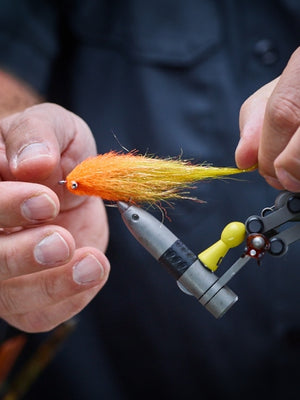
I started tying flies at a young age. I remember my first fly being a woolly bugger tied with red chenille, blue hackle and marabou. Unfortunately, I lost it to a tree not too long after I tied it. My commercial fly tying began about 20 years ago at a tackle shop in southern Maine. I just tied simple clousers and deceivers for the shop fly bins in those early days. More recently, I worked in retail and tied commercially for All Points Fly Shop in Scarborough after closing my small glassblowing business in the wake of Covid.

Over the last few years, it really hit me that my internal fire is stoked by making stuff with my hands and selling it for a living—and flies are what fuel that fire.

RIO: Seems that fire has burned with enough intensity to get you to strike out on your own and leave the fly shop life to start your own thing.

Joe: It has for sure. Today I am an independent fly tier and fly designer making a living selling flies direct to consumers. Crazy idea, I know. But through my time working at local shops, embracing the local fly fishing community, and fishing at an insane level (I once fished 1101 days in a row), I’m honored to say my flies developed a reputation—and demand. There came a point where there just weren’t enough hours in the day to tie all the flies people wanted from me. Something had to give and I needed to make a change.

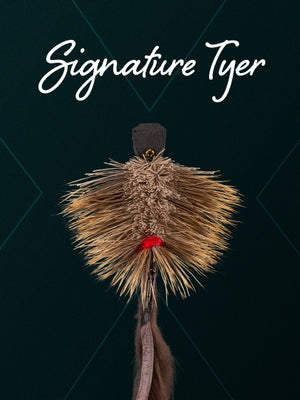
I made the jump and recently started my own online store at www.fishbigflies.com where people can purchase the flies that I tie personally. At the same time, I continue to work with the RIO team to produce high quality, innovative RIO Signature Tyer patterns for the global market.

Fly fishing and tying flies for those adventures are my entire life. I really have no other hobbies, and my entire social life is centered on fishing with friends. All I do is tie flies and go fish them and am lucky enough to have anglers who also want to fish them. I feel super fortunate for that.

RIO: Besides hanging your own shingle, you’re also a RIO Signature Tyer with a handful of patterns sold through RIO and our fly shop dealers. How does that enter the equation and what exciting things are going on there?

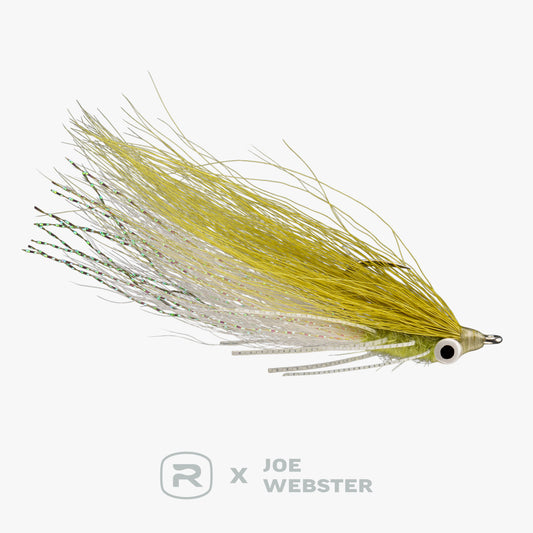
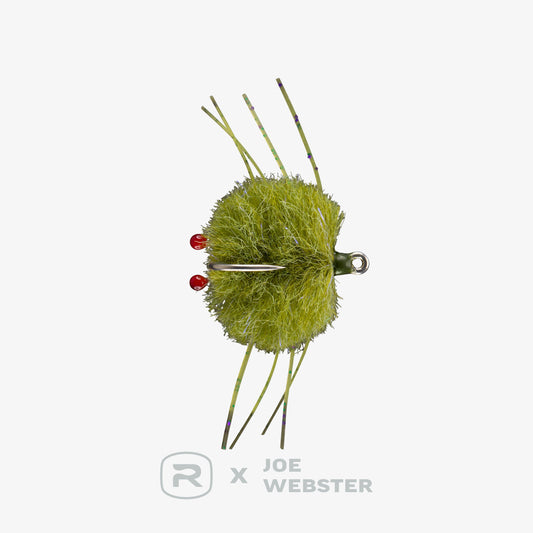
Joe: With the help of RIO producing my bread-and-butter striper flies like RIO’s Webster Crouser and RIO’s Webster Shrouser, I can focus on tying the big specialty flies that are the passion driving my independent business. Currently, I’ve got five different Signature Tyer patterns with RIO all falling in the saltwater/striper and streamer realm with a focus on hooking big predatory fish.

I am always coming up with new stuff and experimenting to find out what works and what doesn’t. Right now, I’m working with RIO to develop some larger profile baitfish flies for striped bass. On the personal tying side, I’m on a northern pike kick tying and retying my classic Maine long shank streamer flies on tubes which have a way higher hook-up ratio and are much more effective for catch and release fishing. As far as what’s next with RIO, keep an eye out because we’re just getting started.

RIO: Beyond being a RIO Signature Tyer, your face is now on RIO fly line box. Tell us how the new RIO Coastal Crabber Ambassador Series line came about.

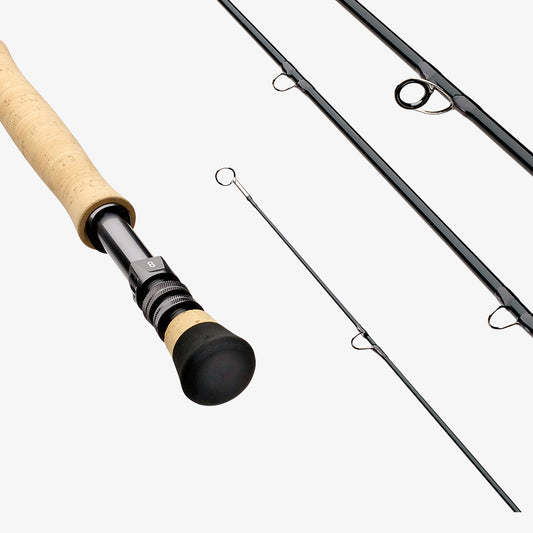
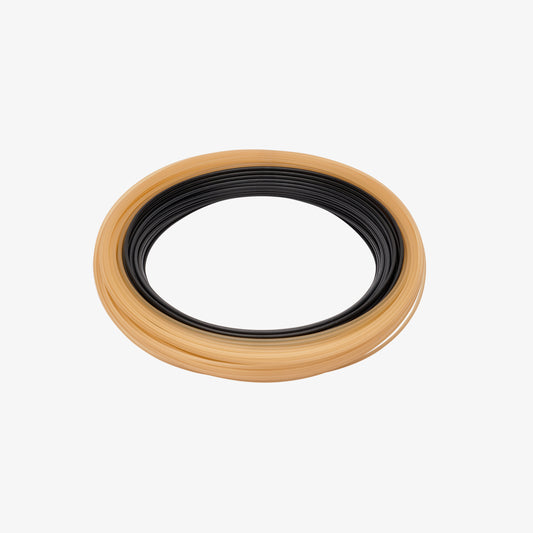
Joe: Over the course of several seasons, I worked with Chris and Wayne in the RIO R&D department to dial in the ideal coastal striper line. We went through multiple tapers, cores and coatings to figure out how to address the issues of current lines on the market that were really good for dragging crab flies for striped bass, but not at the level of excellence we demanded.

We started with the Tropical Outbound Short I/S5/S7 which was my line of choice. It was the right sink rate with a heavy-duty low stretch core and strong coating. It could cast at distance with ease, and while super-clean presentation of crabs to stripers wasn’t a priority, it was something that we also wanted to address. Our biggest challenge was adjusting this tropical line to colder water temperatures to increase handling performance. We began by adjusting the coating and it didn’t take long to find something that delivered what we needed. The result was a much harder and more durable coldwater striper-specific line that was a great blend of stiff and supple.

Next, we took a look at tapers. I had two that I was evaluating, one of which was a very short 24ft head that was good for quick shots but fell short at distance. The other was an Outbound Short with a 30ft head that was closer to what we wanted from a performance perspective. I went to Chris at RIO with my observations and he came back with a slightly longer head and new front taper that put most of the weight at the back of the head.

When I received that prototype and was regularly casting into my backing, I knew that was it. The slightly longer head and thinner diameter also increased the line’s sensitivity dramatically. Every bump of sand and obstruction was detectable. Every bite was obvious—to the point where you could feel when the bass sucked in the fly and when that fly hit the back of the fish’s throat.

The only thing left was for Chris and Wayne to add an extra 10ft to the back of the running line. The final result of those months of testing is the RIO Coastal Crabber Ambassador Series line. Today, there is no other line I will throw when fishing crab flies, and it’s not a bad sink tip line for baitfish in deep water either.

RIO: We've seen you showcasing some big predators over the years from pike to stripers. Would love to know how you schedule your fishing year around those species and any others that you actively pursue.

Joe: I really don’t schedule my fishing year — I take it as it comes and fish for whatever I feel like on a given day, granted it's in-season. During our saltwater season, it’s hard to drag me away from striped bass. In the colder months, when the stripers are further south, I love trout and salmon fishing, but if conditions aren’t ideal, the fisheries feel over-pressured, or I think I’m adding unnecessary stress to vulnerable populations around spawning times, I’ll opt for something else like northern pike or freshwater bass.

I just like catching fish and doing it in as many different ways as possible only adds to the excitement and experience.