

RIO Pro-Files | With Marty & Mia Sheppard

Geoff Mueller October 10, 2025

Swinging flies for steelhead pulls in a certain type. If your resume includes an engineer’s penchant for solving problems, a monk’s willingness to live on faith and a magician’s ability to every so often pull a rabbit out of the hat, you’re a shoe-in. Every ounce of sacrifice makes every moment with these marine-bright badasses that much more sensational. And this maniacal devotion to species and sport, no surprise, makes for good people.

We know this because among the nomadic steelheading community exist some of the kindest, most tenacious people in the fly fishing realm. Oregon-based guide and outfitting duo Marty and Mia Sheppard are prime examples of the latter and we’re proud to have them as an integral part of the RIO fly lines family.

Marty Sheppard was born and raised in Oregon and grew up on the banks of the Sandy River. With his dad as a tutor, Marty landed his first steelhead at the age of five. His father continued to hone and shape Marty’s future by taking him fishing, seemingly every day, and instilling in him the instincts and techniques needed for successfully pursuing steelhead. Much of Marty’s fly fishing inspiration came from devouring books written by notable, insightful naturalists such as Roderick Haig-Brown, Bill McMillan and Trey Combs. In the 1990s, Steve Kruse took Marty under his wing and taught him the art of Spey casting that now manifests Marty’s unbounded enthusiasm for guiding. Backed up by over two decades of professional experience in the “field”— his style is almost missionary zeal for teaching others and sharing in the pure joy of rivers.

The yin to Marty’s yang, Mia Sheppard’s passion for fish and rivers also started at an early age. She grew up in Tennessee where her parents would take the family hiking, fishing and camping in the Smoky Mountains. Fly fishing caught her attention in 1996 as an off-season accompaniment to snowboarding. In 2003, she started her guiding career on the John Day River, when she and Marty purchased Little Creek Outfitters. Mia soon became a casting force and went on to become a three-time world champion Spey caster.

She uses all that experience and knowledge on distance casting to help anglers hone their Spey casting skills and become better anglers. When she isn’t on the river, or being a mom, she’s hiking the desert with her dog, hunting upland game birds in the fall. Mia is a board member of the Oregon State Marine Board and a member of the John Day/Snake River Resource Advisory Board.

RIO: How did you first become immersed in the steelhead game? Talk to us through your initiation days.

Mia: For me it started when I first picked up a two-handed rod on the John Day River in 2001. I had a single-hander and Marty told me not to use it—I had to use the two-hander. We went back and forth, then I finally gave in and that day hooked a steelhead. But I really didn’t get the bug till 2007 after my daughter Tegan was born. A light bulb went off, and I thought, "We have this little fishing business taking people steelhead fishing—I should start guiding steelhead trips, too."

Marty: Born into it! I grew up on a steelhead river with a dad who loved to steelhead. I'm very thankful for that.

RIO: You guys are a powerhouse team. Give us a couple of stories about the early days, linking up and finding your way in the steelhead world.

Mia: It was 2002, Marty and I were driving from Alaska to Oregon and stopped to fish the Kispiox and then the Bulkley on the way south. We camped for a few days at the Rodeo Grounds on the Kispiox and Marty hooked a steelhead. He was jacked! We also visited with Bob Clay. On the Bulkley, a fisheries officer checked our licenses and looked at our hooks to see if the barbs were pinched. I didn’t catch a steelhead that trip but little did I know that this first romp would be the start of becoming a steelheader and chasing these incredible fish from Alaska to Oregon.

Marty: For at least 10 years before we started dating Mia and I would adventure together. Hiking, snowboarding and fishing were highlights and this led to a lifelong relationship and running a business and starting a family together.

RIO: You now run Little Creek Outfitters on the Deschutes, Sandy, John Day and Grande Ronde rivers. Tell us about the operation.

Marty: I grew up on the Sandy and continue to guide winter steelhead trips there. We specialize in multiday trips down the Wild & Scenic sections of the other rivers you mentioned. Our goal is to float away from the crowds, offer a soulful journey and provide a level of excellence in our craft.

Mia: What sets us apart is the decades of knowledge we have in Spey casting and steelhead fishing the rivers we guide. It's not about the number of fish you catch, it's about the whole experience and the things you can control—such as serving great food, making a cozy camp and having a good attitude.

RIO: Competitive casting. Why did you get into it and what were some of the key takeaways from those experiences?

Mia: Marty didn’t cast competitively but I did and he helped me prepare for my first win. Marty and I competed in both snowboarding half-pipe and boardercross back in the ’90s and I loved it. I made some great friends that I’m still in touch with today. Competing pushed me to go faster and build mental focus and become a better athlete. All that crossed over to why I started casting competitively. I wanted to get better and push myself.

In the pond there are elements you can’t control, such as the wind. Focus on what you can control, such as your breath and attitude. The same goes for on the river.

RIO: Advice for new anglers stepping into the swing game?

Mia: Over the last week I guided four anglers, two of them had some steelhead experience but had not been on the water since last year. The other two were new steelhead anglers with no experience. The message was the same: consistency increases your chances of catching steelhead. If you're consistent, at least you're doing your part, then it's up to the fish to do theirs.

Cast the same distance through the entire run, turn over your fly, take the same number of steps between each cast. And when you step into a run, take your fly off the guide and begin with a short cast, don't just peel the whole head out and start bombing. Start with your leader out and make your first cast, let that swing, then pull two feet of line off the reel and make the next cast. Repeat this till you’re casting a comfortable length of line and the fly is turning over every time… then start moving down the run with a consistent distance between steps.

Also, learn to roll-cast! Every Spey cast is a roll cast with a change of direction. The number of Spey casters that don't know how to roll cast is stupid.

RIO: What are your preferred summer-run and winter-run setups for fishing in your regions?

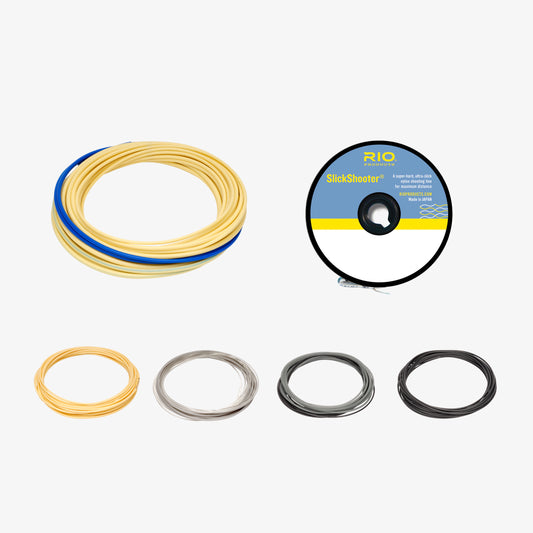
Mia: I love all rods for all occasions but in the summer/fall for steelhead I gravitate toward 7wts with a RIO Scandi Launch 470gr and a 10ft clear floating VersiLeader, plus 10- or 12-pound tippet.

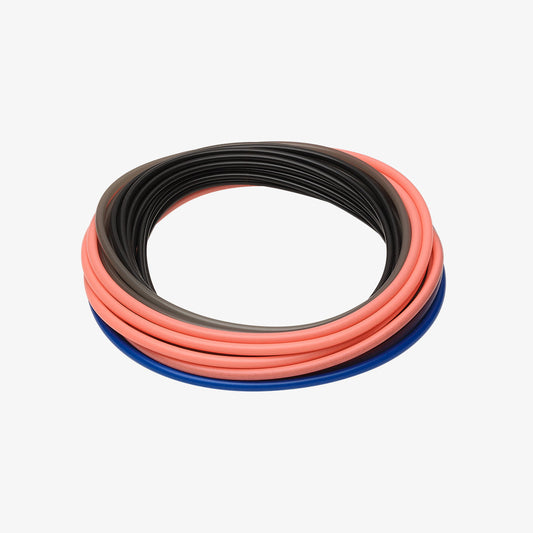
Winter set-up is 7130 with the RIO GameChanger F/S3/S5 500gr, the tip I use depends on the water level.

Marty: For steelhead, 7wt rods 13’ or longer are my go-to. They just have the right amount of command balanced with the right “feel”. I love to feel the rod load. Winter is the Skagit line game and summer is the Scandi line game. RIO has all the options in high quality design and craftsmanship to get every scenario covered! All things considered, I love all lengths of rods and all types of styles. From bamboo to fiberglass, I’m down. Long lines to short compacts, I love it.

RIO: You recently built a house in Maupin, setting a foundation for family and fishing. Talk us through that experience?

Mia: I could write a book about this but will try to keep it simple. We moved to Maupin in 2013 to be closer to the rivers we guide and we liked how small the school was for Tegan. In 2020 we sold the house in town and bought 13 acres on a bluff and started the process of building a place from the ground up. We constructed a yurt first and lived in that while the house was being built. The yurt had no running water or electricity. A Jackery came in handy and so did Starlink. It sounds romantic but it got old. We had a great local contractor that helped a ton and we made friends with some of the other contractors. To save money we did a lot of the work ourselves, such as hanging the siding, painting and most of the finish work that Marty did. Luckily, he is very skilled at building. Of course, there are little things that aren't finished but we will get to it someday when the funds aren’t going toward other projects, such as building a garden and a big shop.

RIO: Kenai Peninsula. What are you plotting and scheming for the future? Tell us about the fishery and your long-term goals up there.

Marty: Alaska is amazing! It has been a part of who we are for a very long time. Both Mia and I have deep roots doing many adventures there and have held onto some type of real estate ownership for many years in multiple locations. My goal is to not lose those connections, plus we love the ease, abundance, and feel of the Kenai Peninsula. We’ve been seeking an opportunity as a team since the day Mia and I started hanging out. This place always comes into focus in our talks of future plans. We love it!

Mia: We are always working to diversify and fill in seasonal gaps. Marty and I have a long history in Alaska, from commercial fishing to owning property in Wasilla. I also lived in Kodiak and Girdwood. We are always pulled back to the Kenai Peninsula and for a good reason—beautiful rivers with abundant big trout, salmon and steelhead, good people and extraordinary wildlife. Our long-term goal is to buy a place in Kasilof and, once Tegan graduates, eventually move there and become residents (only for the sheep tag:)).

RIO: What do punk music and steelhead fishing have in common?

Marty: Like Bad Religion said, “I’m afflicted, you're addicted.”

Mia: Punk music and swinging flies for steelhead defies the mainstream and gives you a sense of freedom.

RIO: What song plays in your head over and over (and over) while you’re steelheading?

Marty: None. I just absorb the surroundings and sounds. Red wing blackbirds, rams knocking rocks or horns, canyon wrens, water flowing by, leaves rustling, chukar cackling, trains, the rhythm of a drift boat oaring by, and a gear and pawl reel screaming… over and over!

Mia: Like Marty, I enjoy listening to the sounds of the river and everything else. Sometimes I get a bad song in my head, you know like, “…working-nine-to-five-what-a way-to-make-a-living…”

RIO: If you could only fish one fly in one color for the rest of your steelheading days what would it be and why?

Mia: Red, it works summer or winter and on every steelhead river I have fished.

Marty: Black.

RIO: Steelhead conservation. Care to weigh in?

Marty: I support conservation and the people who are actively advocating for the steelhead, water quality and projects needed to maintain both. Each year I do my best to be a steward, a donator and watchdog for these special critters we love and care about.

Mia: I love steelhead and the rivers they live in. Unfortunately, there are many limiting factors to the health of steelhead and rivers; global warming (it’s 101 degrees as I write this on September 5), dams... and gillnetting on the Columbia River is f*cked up. I’m not going to stop fishing or floating rivers. When people stop going to thse places that's when these places lose their voice.

My job is to keep people connected to the rivers and the fish, so the rivers have a voice. The Deschutes is iconic and unfortunately the water quality has deteriorated since the mixing tower was installed in 2009. Thankfully, the Deschutes River Alliance is advocating for cleaner water and putting up a good fight. Recently Congressman Cliff Bentz came to Maupin to talk to local outfitters about the river. It was one of the best meetings in a long time and it gave us hope.

RIO: What keeps you connected to the species, the culture, the pursuit?

Mia: Steelhead are nomadic, resilient and badass. What keeps me connected are the great people I meet through guiding and the great places steelheading takes me. It's also the bond that Marty and I have together. It’s in my DNA as Marty likes to say.

Marty: Everything about them keeps me enthralled. I suppose we are just too entrenched to be bandwagon fans. Steelhead are literally a massive part of our life, livelihood and DNA. Certainly a part of our soul!