Community

Guide Mindset | Florida Gamefish with Capt. Chris Adams

Matt Otepka April 09, 2026

Few saltwater destinations offer the diversity of South Florida. Sage Elite Pro Capt. Chris Adams has spent two decades mastering the state's varied species and ecosystems, from his early days hosting international trips with Trek Safaris to running his own guide service across Biscayne Bay, the Florida Keys, and north to Mosquito Lagoon. A fourth-generation Floridian who understands how seasons, tides, and conditions dictate which rod comes out from under the gunwale. We sat down with him to discuss his approach to guiding Florida's year-round fishery, the tactical decisions that separate good days from great ones, and why he's passionate about the Everglades ecosystem that sustains it all.

Find Capt. Chris at Endless Flats Charters and @capt_chris_adams

Sage: As a fourth-generation Floridian with roots that stretch from the Keys to Jacksonville we must assume that you grew up on and in the water. What was your childhood like and when did the fishing bug take hold?

Capt. Chris: Fishing was really priority number one for me early on, even before organized sports came into the picture. My grandparents lived on a neighborhood golf course pond, and with my little jon boat it felt like the ocean to me. Looking back, I still can’t believe my parents let me fish out there as young as I was, but those are memories I will never forget. No matter what else was going on in life, through childhood, travel baseball, and even college, fishing was always there.

Sage: How long have you been a professional guide and when did you realize that was what you wanted to do?

Capt. Chris: This year marks my 20th season as a guide and host, and my 10th year running my own guide service. While finishing my marketing degree at the University of Florida, I was looking for a way to break into the fishing industry and found that opportunity with Trek International Safaris. Right out of college I began booking and hosting wingshooting and fly fishing trips, which quickly turned into more than a job.

For more than a decade, I traveled throughout Central and South America, spending time in blinds, skiffs, drift boats, and even the occasional Cessna. The destinations were incredible, but it was the amazing clients I met along the way that ultimately inspired me to start guiding on my own once my time at Trek came to an end.

Sage: You’re based out of Biscayne Bay but grew up in the northern reaches of Florida. What pushed you to set up your guiding base of operations in Miami waters?

Capt. Chris: After my time with Trek Safaris, we headed south and eventually settled in Central Florida. That is where I started my own guiding business in Mosquito Lagoon, although I found myself towing the skiff down to South Florida quite often. Through my international travels I had the opportunity to watch some of the best bonefish and permit guides in the world operate, and it sparked a real desire to learn that fishery myself. With my family ties to Miami and the challenge of chasing the “big three” that make up the Grand Slam, the move south was something I knew I had to make.

Sage: Give us a general sense of what your guide season looks like. Where and when you’re fishing and what species you’re targeting during those times.

Capt. Chris: We are very lucky that here in Miami we can catch a bonefish 365 days a year, but the wintertime cold front can throw us a curveball. During the holidays or first of the year the cold fronts give me an opportunity to venture back north in Mosquito Lagoon or even North Florida for incredible clear water sight fishing for redfish. As the weather warms my full attention moves to bonefish and permit along with the migrating tarpon in the northern Florida Keys. Our best chances for a Grand Slam start in April and continue into the early fall.

Sage: As a Sage Elite Pro, you’ve got quite the quiver of Sage rods at your disposal. It’s a given that the SALT R8 holds pole position in your boat but we also know that the new POWER R8 sees a lot of at bats on your bow. What’s the decision process behind which Sage rod you pick up and hand to a client?

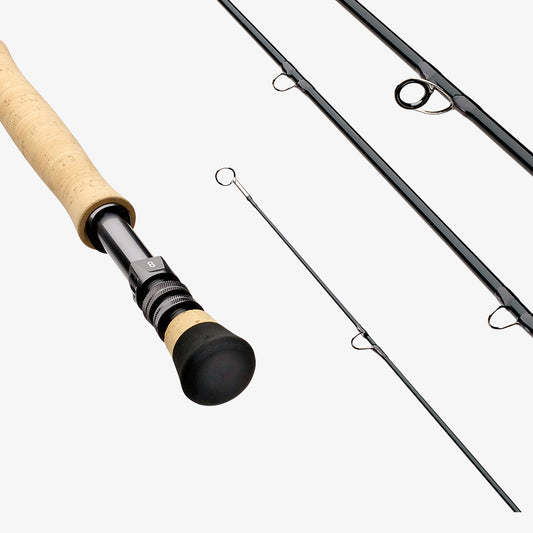
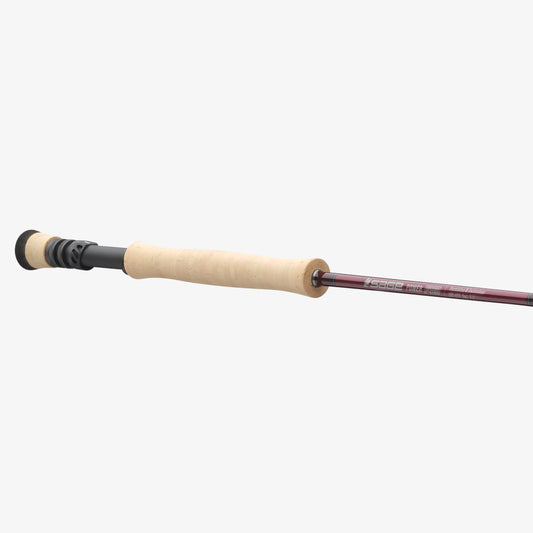
Capt. Chris: My most common quiver on the skiff day-to-day is an 8-weight through 10-weight SALT R8 with the 11-weight joining once tarpon start swimming. For certain anglers with a faster casting stroke, the 7-weight POWER R8 has been added under the gunwale. During spring and early summer we do get some blustery conditions, and since our bonefish in Biscayne Bay tend to be on the larger size, the SALT R8 in the 9-weight class sees the most action. During the times of lighter winds we try to pull out the POWER R8 as much as we can because our Bonefish are notoriously difficult and the 7-weight lets us present a lighter fly at a greater distance with extreme accuracy. I’ve been very impressed with the POWER R8 so far, and I’ve had every 7-weight from Sage's ultra-fast linage going back almost 20 years to the TCR.

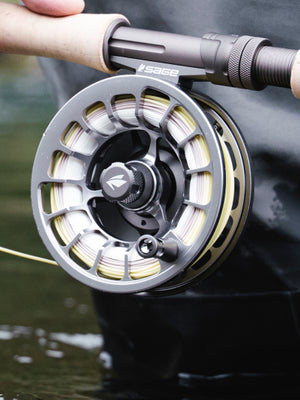
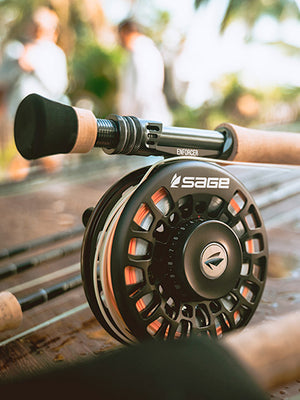
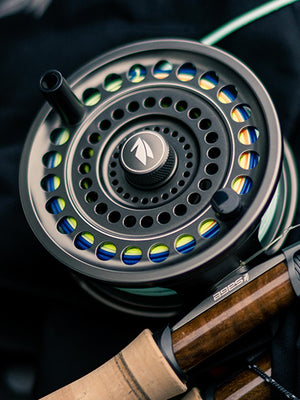
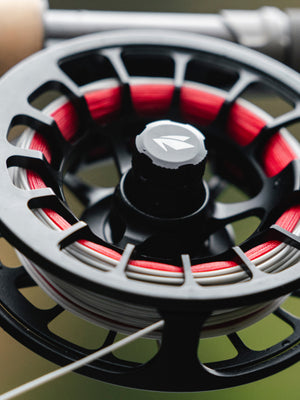
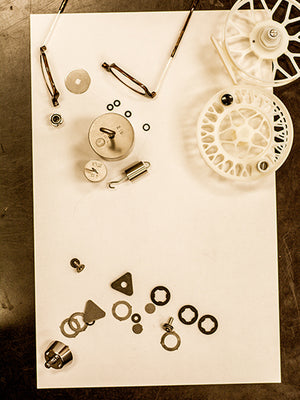
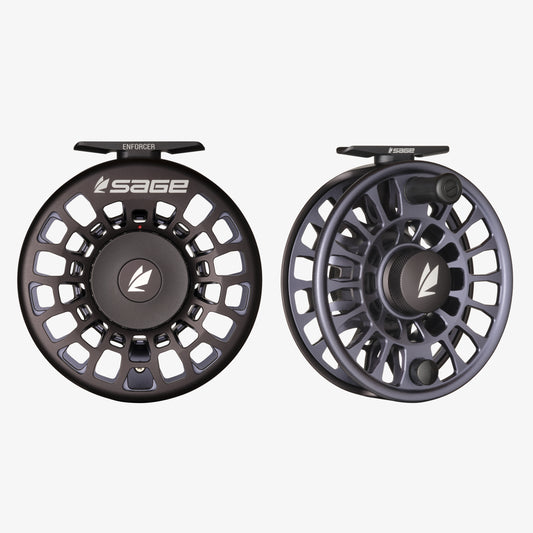
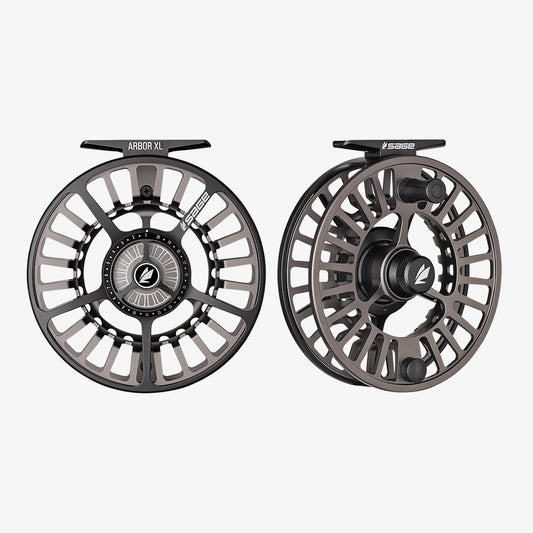
For the reels, I jump between the ENFORCER and ARBOR XL. The ENFORCER takes on the heavier lifting at 9-weight and above, and its user-friendly One Revolution Drag Knob makes for fast, precise drag adjustments during the heat of battle. From the back of the skiff, being able to tell a client to go from a drag of 4 to 7—and knowing exactly how that will play out—can be the difference in hooking and landing a fish of a lifetime. In the lighter weight rods, the Arbor XL is the choice. For my 7-weight POWER R8 or 8-weight SALT R8, the lightweight Arbor XL gives a new or experienced angler the ability to carry that reel all day. Plus, our bonefish not only have a tendency to run but they love to reverse course and come right back to the bow of the boat making line pick-up the utmost of importance. The larger arbor and the narrow spool of the XL gives the best of both worlds when it comes to catching up to those gray ghosts.

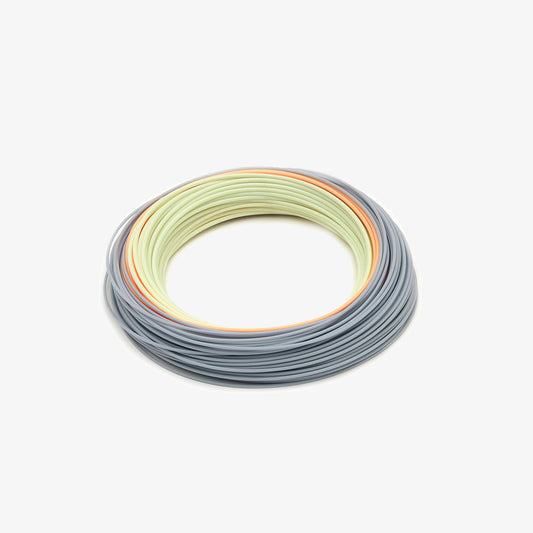
For the fly lines, I am a clear line or clear tip guide. We have wary fish in Biscayne Bay and if we can gain even a 10% advantage with a clear line or clear tip, I am going to take it. Typically, the RIO Premier Flats Clear Floater 6-ft clear tip is all that is necessary as I hand tie longer fluorocarbon leaders with RIO Fluoroflex, but the extra 6-feet of clear tip makes a difference. Whether you are taking a shot at a bonefish quartering away or when a group of permit come to look at your fly, any extra room you can allow them to not see your fly line, is a better chance at getting that fish to commit.

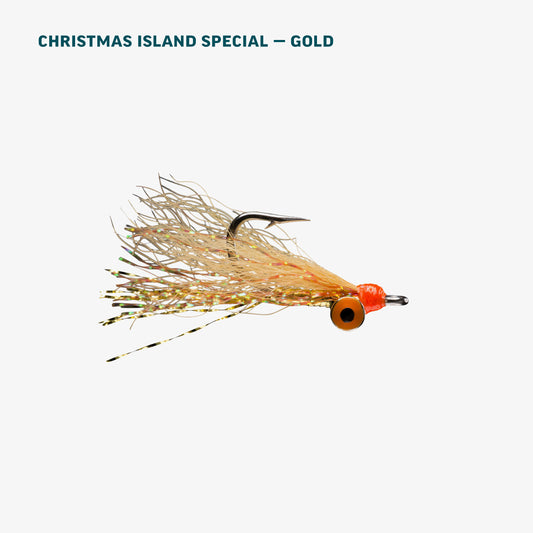
The fly is the easy part. I would never leave home without a Spawning Shrimp. From Mosquito Lagoon redfish to Biscayne Bay bonefish, and from the Florida Keys to Ascension Bay, Mexico, you should have at least a half-dozen Spawning Shrimp in your box.
Sage: What’s the best piece of guiding advice you’ve received? And what would you tell a young Chris Adams just starting his career?

Capt. Chris: A great guide who became a mentor and now a great friend once told me, "Always listen to your client." It might sound simple, but hearing your client and listening to them are two different things.

A client can't always tell you exactly what they are feeling, needing or wanting. You have to truly listen to understand how to best coach them. Do they need positive reinforcement or straight-talk? Do they judge distances the same as you or do you need to have an initial sidebar to establish a mutual understanding. You are a team and, most of the time, have just eight hours to accomplish a goal, so listen.

Sage: What general piece of advice would you give the DIY fly angler for success in your local Biscayne Bay waters?

Capt. Chris: Biscayne Bay is a notoriously tough fishery; humbling one day and rewarding the next. This is a place that you truly need to leave your ego at the ramp. For those looking to DIY in Biscayne, keep an eye on the weather, it is a wide-open place with very few areas to hide should the wind pick up. Two things you need before you go: 1) check the weather, and 2) check with the team at Ole Florida Fly Shop, they are a wealth of knowledge and have what you need for a successful day in The Bay.

Sage: Any key tactics, rig tricks, water types, etc that you think are overlooked by the average (or even pro) angler that you want anglers to keep in mind?

Capt. Chris: Our gear today is better than it has ever been, but when it comes to bonefish the difference between an eat and a refusal can be incredibly small. Because of that, I tend to lean toward longer leaders, often 12 feet or more. Bonefish rarely sit still, so even a perfect cast can leave your fly slightly out of position, and that extra leader length helps keep you in the game. Fluorocarbon plays a big role here. It is well known for its stealth, but it also has a natural stiffness that helps with turnover. While some anglers avoid longer leaders because they worry about casting or presentation, fluorocarbon can help bridge that gap and ultimately lead to more bites.

Sage: What might the uninitiated not know or appreciate about your local Miami waters?

Capt. Chris: Florida is a place where the most beautiful and incredible outdoor adventures can be hidden in plain sight. The number one comment I get from people that fish with me the first time is, “I can’t believe you have this in Miami!” Most people think of the nightlife, beaches or sports when they consider Miami, but they get a whole different perspective when they look up and see the skyline from the bow while we sneak up on a tailing bonefish.

Sage: The greater Florida environment has frequently been in the media spotlight during the last few years, particularly the risks facing the Everglades ecosystem. What conservation battles or organizations are you supporting, and as a guide, what environmental wins and losses have you viewed with your own eyes while on the water?

Capt. Chris:
As a fourth-generation Floridian, it’s hard to watch a place that was once so pure and rooted in nature give way to subdivisions and parking lots. I’m deeply grateful for the guides who have stepped away from their livelihoods to fight for our estuaries—especially the Florida Everglades. Captains for Clean Water has brought together an incredible coalition, from business owners and boaters to anglers, captains, and guides, all standing up for the real Florida. I never thought I’d see the day when a National Park was in such jeopardy that this fight would have to reach our state capitol and Washington, D.C., just to preserve something that should have already been protected.

Sage: Obviously Florida waters are an embarrassment of riches when it comes to the sheer number of saltwater species and ecosystems. That said, if there was just one fish for you to chase on a given day, what would it be?

Capt. Chris: I understand that when most people think South Florida and the Florida Keys, tarpon season is the first thing on their mind. Don’t get me wrong, I have grown an affinity for tarpon in the last few years but if I had one fish to chase for the rest of my life, it would be the permit. They are stubborn, unforgiving and the lows can be low, but there is nothing like the high of catching a permit on fly. However...

As much time as I spend chasing fish on the flats with a fly rod, the only other fish that keeps me up at night besides permit is the sailfish. There is nothing like watching one light up behind a spread of live baits, and their aerial displays rival even the best tarpon jumps. South Florida has an incredible sailfish fishery, and I have even managed to catch a few out of my Hell’s Bay skiff. It is a pretty wild feeling being hooked up out there alongside all the big sportfish boats, and it always makes me smile when they give a little respect to the “dinghy” over the radio.