Getting Ready

We’ve created a quick checklist of essential tasks to make sure you’re fully prepared for the journey ahead. If questions come up or you need anything at all, just give us a call, we’re here to help every step of the way.

To-Do List:

✓ Arrange flights to/from Santiago, Chile

✓ Arrange hotel in Santiago (for departure, if needed)

✓ Arrange flights to/from Puerto Montt, Chile

✓ Arrange hotel in Puerto Montt or Puerto Varas, Chile

✓ Complete personal online guest registration form

✓ Forward a copy of the passport photo page to Fly Water Travel

✓ Get travel cash

Getting to the Lodge:
To reach Patagonian BaseCamp Lodge, guests will need to arrange travel to Puerto Montt, Chile (PMC). All international flights connect through Santiago, Chile (SCL). An overnight stay in Santiago or Puerto Montt/Puerto Varas is required before the start of the program.

Arrival Day:
Guests are asked to arrive on the earliest flight to Puerto Montt (PMC) if they have opted to stay in Santiago. A transfer driver will meet you at the airport upon arrival and transfer you to the private airport for your charter flight to Chaiten. For guests overnighting in Puerto Montt/ Varas, a transfer to the airport can be arranged through your hotel.

Departure Day:

Guests are asked to book a departing flight out of Puerto Montt after 3:00 PM.

Charter Flight Information
The charter operator uses different terminals at La Paloma depending on the company operating your flight. We will provide your terminal information and charter departure time shortly before your trip.

  • Baggage: The maximum baggage allowance on the charter flight is 45 pounds per person. Excess baggage is subject to a fee of approximately $1.50 per pound, payable directly to the charter operator at the airport by credit card or U.S. dollars. If necessary, the lodge can arrange complimentary storage for excess luggage at the charter airline's office.

Documentation Requirements:
To enter Chile, all guests are required to have the following:

  • Passport: Valid for the duration of your trip.

Note: U.S. citizens traveling to Chile for recreation and tourism do not need to obtain a visa prior to arrival. Upon entry, immigration will issue a tourist card (Tarjeta de Turismo) valid for up to 90 days. Do not lose this card! It must be presented upon departure — failure to do so may result in delays. If lost or stolen, the card can be replaced by the PDI at their nearest headquarters.

Recommended Travel Agent:
Alicia Regueiro, Holdy Tours
800.446.1111 or 925.927.6617
alicia@holdytours.com

Santiago Recommendations:
Hotels:

Las Condes Neighborhood:
Mandarin Oriental
Presidente Kennedy Avenue #4601

Lastarria / Bellas Artes Neighborhood:
Hotel Cumbres Lastarria
299 José Victorino Lastarria

Restaurants:
Las Condes Neighborhood:
La Cabrera Chile Isdora
Isidora Goyenechea 3275

Pinpilinpausha
Isidora Goyenechea 2900

Lastarria / Bellas Artes Neighborhood:
Bocanáriz
José Victorino Lastarria 276

Chipe Libre - República Independiente del Pisco
José Victorino Lastarria 282

Puerto Montt/ Puerto Varas Recommended Hotels
Courtyard by Marriott Puerto Montt
Seminario 252, 5507418 Puerto Montt, Los Lagos, Chile

Radisson Hotel Puerto Varas
Del Salvador 024, 5550000 Puerto Varas, Los Lagos, Chile

Currency:
The official currency of Chile is the Chilean Peso (CLP). US dollars (USD) are not widely accepted for purchases but may be used for gratuities. We recommend exchanging a small amount of USD (around $100–$150) into Chilean pesos (CLP) for tips, taxis, or small purchases.

Exchange Options:
We recommend the following for exchanges:

  • Airport Currency Exchange Counters: Convenient but may have slightly higher rates.
  • Hotels
  • ATMs: Widely available in Santiago and Puerto Montt. ATMs dispense Chilean pesos directly from your home bank account.

Electrical Requirements:
Chile uses Type C or Type L plug adapters with a 220V / 50Hz electrical system. Travelers from North America will need a voltage converter for devices that do not support dual voltage.

Communications:
While traveling in Chile, we recommend using WhatsApp, as this is the primary communication method used by most lodges, outfitters, and drivers. Messaging through the app will allow you to stay connected with your hosts, guides, and family when Wi-Fi is available.

Travel Cash:
We recommend each guest travel with:

  • $2,000 (USD) per week of travel
  • Bills should be new and in larger denominations, such as $50s and $100s.

Credit Cards:
Not accepted

Gratuities:
The following is a guideline. Gratuities are up to the discretion of the individual guest and can be left with the lodge manager at the end of the week for distribution to guides and lodge staff.

  • $900 (USD) per person per week

Fishing Licenses:
Included in package

Cell Coverage and Wi-Fi:

  • Cell Coverage: Minimal
  • Wi-Fi: Available at the lodge, unavailable at out-camps

Power:
Available 24 hours a day at the lodge, No power at Palena Camp, generator power at Temple Camp

Laundry:
Available twice weekly

Water:
Tap water is safe to drink. The lodge provides reusable water bottles.

Beverages/Alcohol:

  • Soft Drinks: Included
  • Beer and Wine: Included
  • Alcohol: Limited selection included

Emergency Medical Assistance:
Due to the remote nature of the Palena region, access to advanced medical care is limited. The closest facilities are a small clinic in Chaitén and La Junta.
In the event of a more serious medical situation, evacuation by ground or charter flight may be required to reach appropriate care. Guests are responsible for any associated costs, and it is strongly recommended that all travelers carry comprehensive medical insurance, including emergency evacuation coverage.

Recommended Medical Evacuation Carrier and Insurance Provider:
Global Rescue

Patagonian Basecamp Lodge Tackle Overview

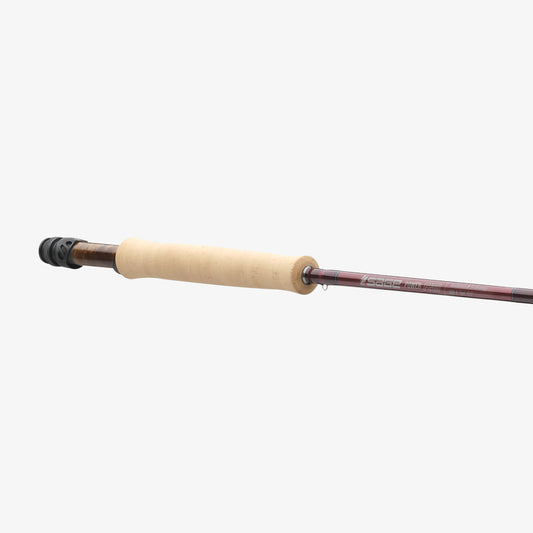
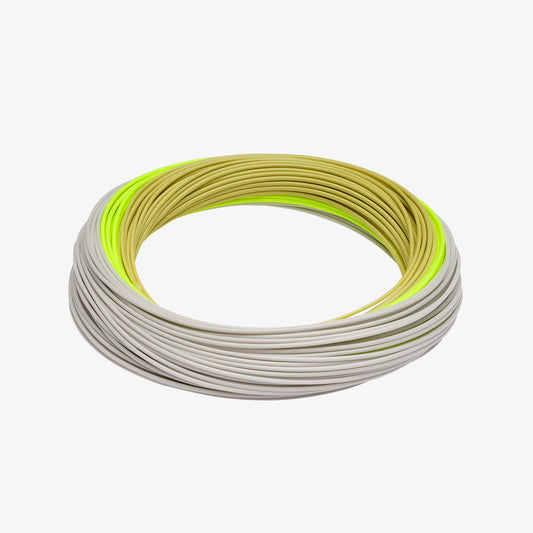
We always travel with at least two set-ups for this trip. A 9ft 6-weight paired with a slightly heavier weight forward floating line and a 9ft 7-weight paired with a weight forward floating line, plus a spare spool with an integrated sinking tip line. The majority of the fishing situations can be tackled with a fast action 6-weight and the 7-weight shines on windier days, casting larger rigs, or targeting fish with streamers. If you’re going to only bring one rod with you then a fast action 6-weight will be the most versatile. Pair it with a slightly heavier weight forward floating line and a spare spool with an integrated sink tip line that is weighted according to the fly rod manufacturers recommendation.

Patagonian Basecamp Lodge Provided Equipment:

  • Rods/Reels/Lines: Not included
  • Flies: Not included
  • Waders/Boots: Not included but available

Patagonian Basecamp Lodge Primary Setup

If we could only choose one rod for Patagonian Basecamp, it would unquestionably be a fast-action 9-foot 6-weight. This is the most versatile tool for the region’s broad mix of water types — from the intimate tributaries and backchannels of the Rio Palena to the powerful mid-river lies of the Figueroa and the varied currents of the Yelcho. A 6-weight offers the perfect balance of finesse and authority: it has the sensitivity to present dries and smaller nymph rigs with accuracy, yet the backbone to turn over terrestrials, handle moderate wind, and backbone when fighting large, strong resident browns and rainbows. Match it with a half-size-heavy floating line and a spare spool with a dedicated integrated streamer line to maximize turn-over and distance.

Recommended Terminal Tackle:

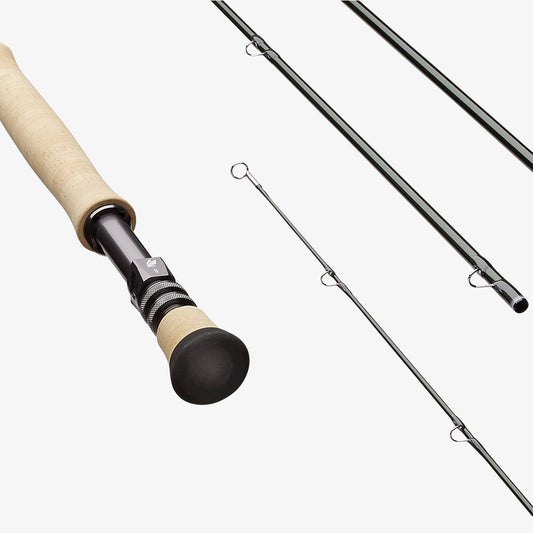
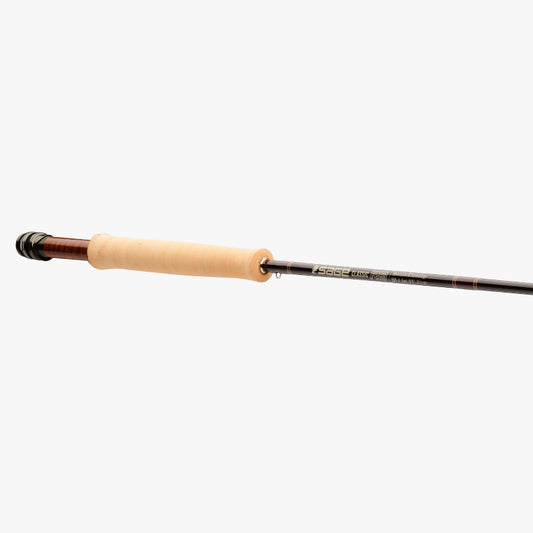
  • Fast action 9-foot, 6-weight 4-piece fly rod
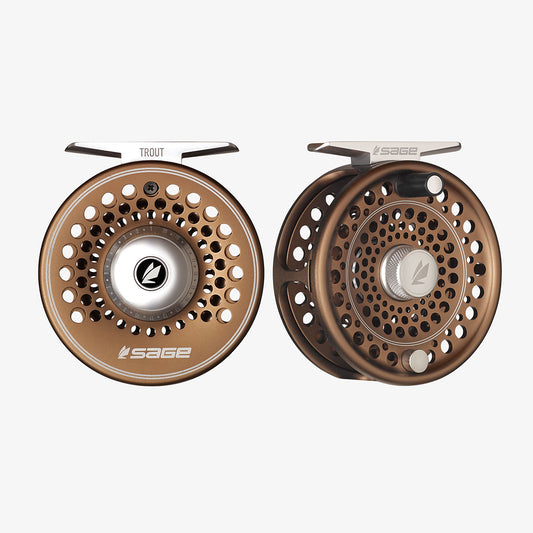
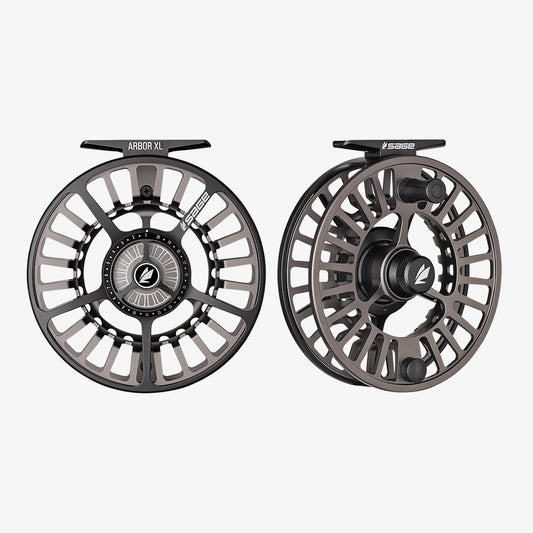
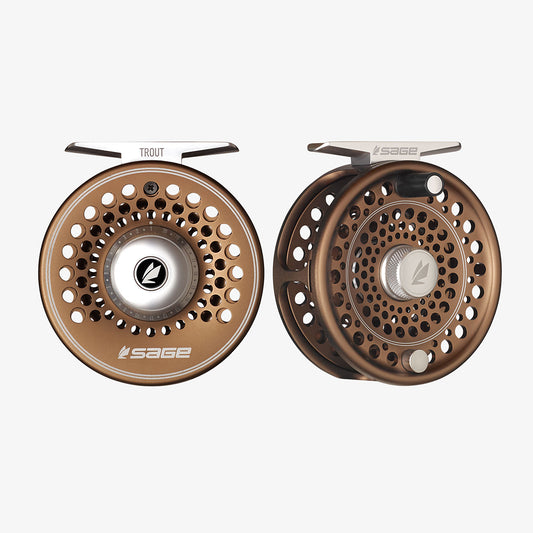
  • Reliable reel and spare spool
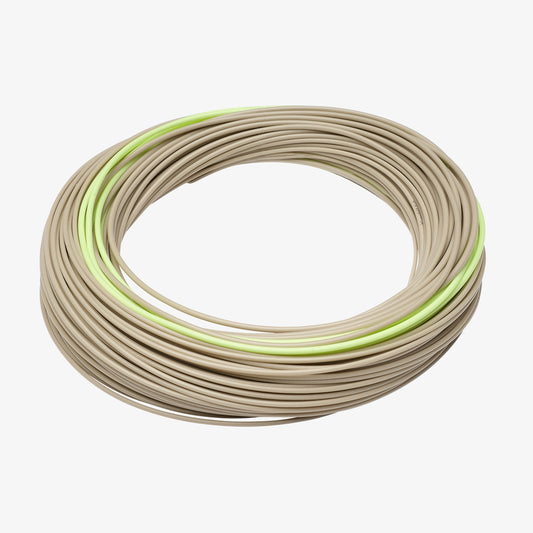
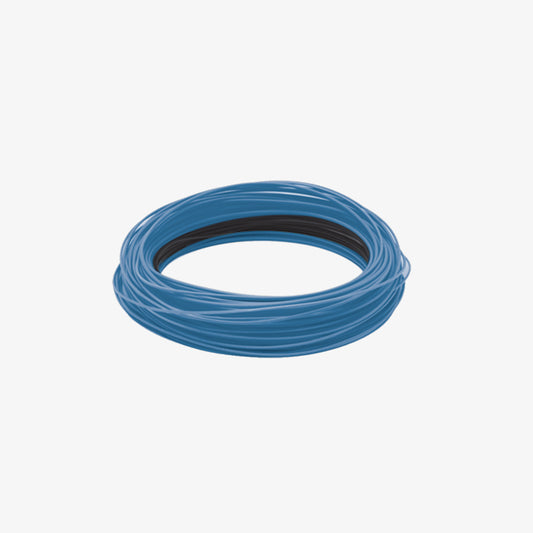
  • 1/2 weight heavier floating line and an integrated sinking line
  • 9-foot 3X and 7.5-foot 2X leaders (Qty 3 each)
  • Spools of 0X, 2X-4X monofilament and fluorocarbon tippet

Patagonian Basecamp Lodge 7-weight Setup

The 7-weight comes out when you’re hunting truly big fish, battling wind, or stripping full-size articulated streamers in deep runs. This rod weight provides the strength needed to drive large flies, sink tips, and heavier lines without collapsing the loop. It’s also the preferred tool for lakes and stillwaters where long casts and strong takes demand more authority. Anglers chasing migratory browns or fishing high-flow tailwaters will appreciate the added leverage and fish-fighting power. Pair it with an integrated sink-tip in the 250-grain range.

Recommended Terminal Tackle:

• Fast action 9-foot, 7-weight 4-piece fly rod
• Reliable reel
• Integrated sinking tip line
• Spool of 0X or 12lb monofilament

Patagonian Basecamp Lodge 5-weight Setup

For anglers visiting the out camp at El Escondido, a 9-foot 5-weight is a highly effective and rewarding tool. The system here is built around gin-clear water, spooky fish, and opportunities for truly large trout, all of which demand precision and subtlety. A high-quality 5-weight offers the lighter swing weight and improved feel needed for delicate presentations, while still maintaining enough backbone to turn powerful fish in tight quarters. Its ability to deliver soft, controlled presentations with long leaders makes it uniquely suited for sight-fishing, technical dry-fly work, and delicate nymphing in exceptional clarity. While not essential for the broader Basecamp program, anglers who enjoy stalking trophy fish in intimate, pristine environments will find the 5-weight to be the ideal instrument for El Escondido’s refined and highly visual style of fishing.

Recommended Terminal Tackle:

  • Medium to fast action 9-foot, 5-weight 4-piece fly rod
  • Reliable reel
  • Weight forward floating line
  • 9-foot 4X and 7.5-foot 3X leaders (Qty 3 each)
  • Spools of 2X-4X monofilament and fluorocarbon tippet


Support Your Local Fly Shop

If you need assistance with assembling your gear for your upcoming travels, we encourage you to support your local fly shop. This curated list of tackle is handpicked for your destination by our experts and can serve as your shopping list to get your ready for your next adventure. Find your local Far Bank dealer.

Patagonian Basecamp Lodge Flies

The N. Aysen & Los Lagos region and surrounding areas trout’s primary diet consists largely of terrestrials, which are plentiful throughout the season as well as mayflies and caddis. A variety of large foam dry flies, mayflies, attractor patterns and streamers will be effective throughout the entire season, and it is good to have a good cross selection of colors and patterns.

Top 5 Basecamp Lodge Flies 

  • Fat Albert - Black/tan (Size 8-10)  
  • Bead Head Prince nymph (Size 14)  
  • Chubby Chernobyl - Royal or Purple (Size 8 -14)  
  • Home Invader - Black or Tan (Size 8)  
  • Autum Splender - (Size 6)   

For an in-depth look at flies, please click HERE.

Suggested Packing List

We understand packing for an adventure is not easy. On a trip like this it is very important to have everything you need and nothing you do not. As the climate is extremely changeable and a wide range of temperatures and conditions can be expected, we recommend layering clothes. Anglers should be prepared with thermal underwear, fleece/soft shell jacket, and a rain jacket. Synthetic fabrics are preferred to cotton. Dress at the lodges/camps is neat but casual.

Documents:
Passport, plane tickets, itinerary, credit card, cash, business cards

Waders:
Breathable stocking foot waders are recommended. For anglers prone to cold (especially feet), boot foot waders are excellent.

Boots:
Rubber soles without cleats are the preferred option. Felt soles are permitted in Patagonia, but please ensure all gear is clean and completely dry before travel to prevent the spread of invasive species.

Wet Wading:
One pair of neoprene socks with gravel guards and quick-dry pants

Forceps:
We like the Dr. Slick scissor pliers for crimping barbs, releasing fish and trimming flies

Nippers:
One line nipper

Wading Staff:
One wading staff and belt

Socks:
Four pairs of wool or synthetic socks to wear under your waders. Two pairs of camp socks.

Base Layers:
One to two pairs of synthetic or merino wool long underwear (tops and bottoms) to wear beneath your waders. One mid-weight and one heavyweight. These can be worn alone or together depending on conditions.

Shirts:
Two or three long sleeve fishing shirts. One or two lodge shirts.

Pants:
Two pairs of comfortable pants for wearing around the lodge and travelling

Warm Layers:
One or two warm insulating layers. Down, synthetic or fleece mid layers are good options. Avoid cotton.

Rain Jacket:
One high-quality rain jacket

Hats:
Two fishing/baseball hats. One warm cap.

Lodge Shoes:
One pair of shoes for around the lodge

Neck Gaitor:
One facial sun protector (good for bugs too)

Sunglasses:
One pair of polarized sunglasses. It is great to have a lens cleaner and a soft cleaning cloth as well.

Sunscreen:
One bottle SPF 30+

Lip Balm:
One tube of SPF 30+ lip balm

Backpack:
One waterproof backpack or boat bag for day gear

Headlamp:
One small LED headlamp with batteries

Toiletries Kit
Toothpaste and toothbrush, deodorant, razor, lotion, mini shampoo bottle, Advil, ear plugs, band aids, anti-bacterial ointment, Benadryl, Gold Bond powder

Patagonian BaseCamp Lodge, Chile

Deep in Chile’s remote Aysen Province, Patagonian BaseCamp offers an adventurous and highly varied trout fishing experience built around seldom-fished rivers and pristine wilderness. Anglers move by raft and jet boat through a landscape of turquoise rivers, dense forests, and towering mountains, pursuing wild brown and rainbow trout with opportunities for true trophy fish. For anglers looking to get off the beaten path and experience Patagonia through movement, exploration, and exceptional trout fishing, Patagonian BaseCamp delivers a distinctly wild and immersive experience.

Learn More

Contact Liam Donohoe

Liam was born and raised on the trout rivers of Idaho, where a lifelong passion for the outdoors eventually led him into the world of professional guiding. Over the past decade, he has built a career guiding and managing lodges across some of the world’s most celebrated fisheries, from Alaska’s Bristol Bay to Chilean Patagonia and the Rocky Mountains in Idaho.

CONTACT US